
Candace Nassar (00:00)
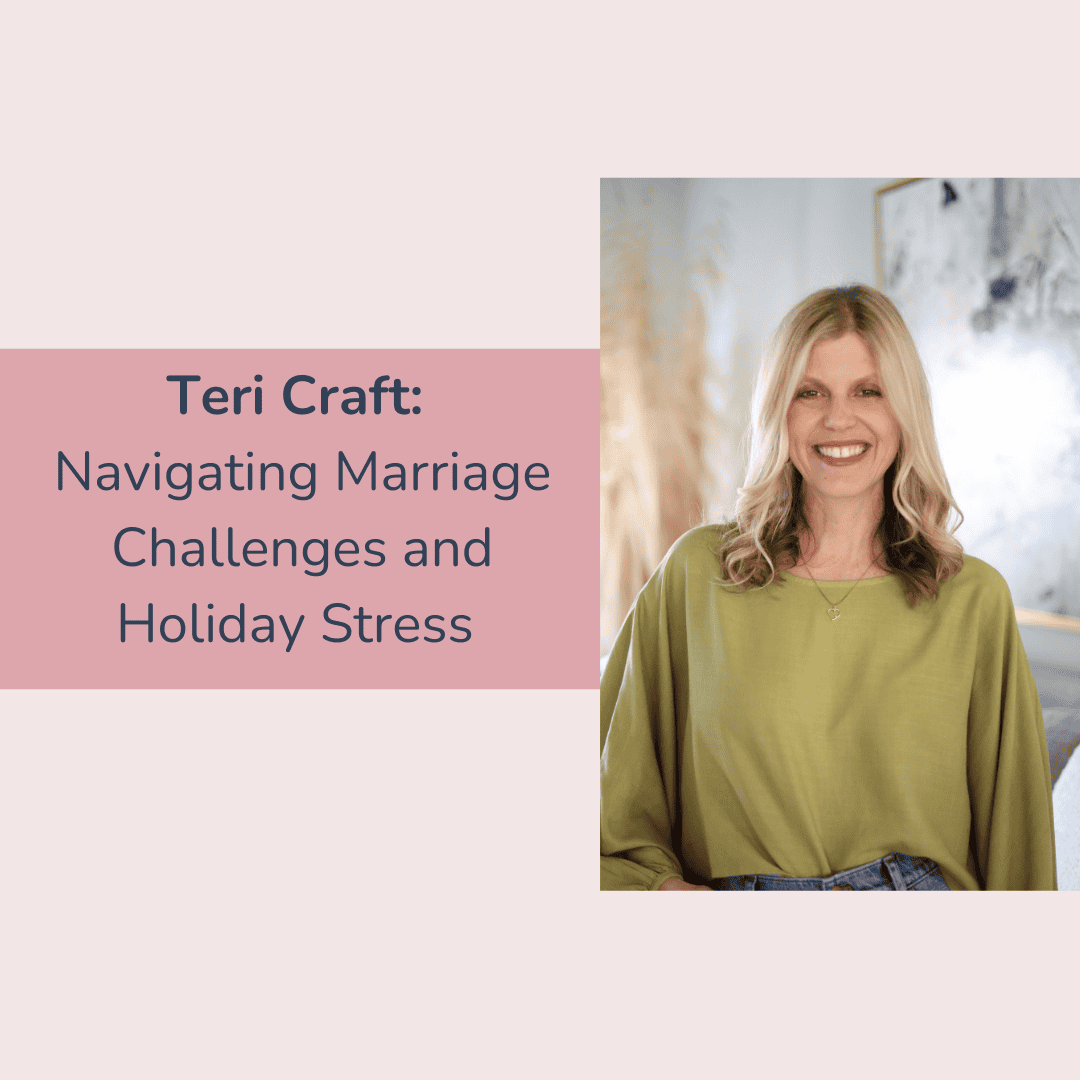
Well, welcome, MomQ family. Today I’m excited to be joined by marriage coach and counselor, Teri Craft. Teri appeared on our show just a year ago, a little over a year ago, and she courageously shared her personal journey of how God restored her marriage after the pain of her husband’s betrayal and struggle with pornography addiction. It’s a powerful story of redemption and forgiveness that I highly encourage you to listen to if you haven’t already.
Teri (00:08)
And.
Mm-hmm.
Candace Nassar (00:29)
That episode continues to rank in our top five month after month. Since that time, with God’s help, Teri and her husband James have founded a thriving marriage ministry called Live Life Unplugged, dedicated to providing enrichment, recovery, and healing for couples. They also host a successful podcast, Marriage Health with Teri and James Craft. I’m thrilled to have her back on the show today. Welcome, Teri.
Teri (00:48)
Mm.
Yeah. Thank you so much, Candace. I absolutely love Mom Q and I not only pray consistently for just the growth of the ministry and all that God is doing in you as leadership to just touch the lives of so many moms out there, but also believe in enough to support it.
I’m so excited to be here today and I kind of consider myself a lifer. Hopefully you’ll see me as much as I can make it happen. So excited. Yeah.
Candace Nassar (01:24)
Yeah.
I love it. I love it. Thank you so much. Yes, we love your support and your key reason we’re still here today. So thank you so much. Yeah, so lots has been going on in your life since we last talked. So why don’t you give us a little update? I know you’re a grandmother now. So how’s that going?
Teri (01:38)
No thanks. Of course.
Yes. Yes!
Yeah. Yes. It’s wonderful. We have our cute little baby Emma Rose and we’re loving it. It’s such an interesting thing going from being a mom to watching your baby be a mom. And just that transition has been glorious as well as has its challenges in the fact that we were so far away. We were living across the United States.
So, we had planned to move out of California at some point and we had prayed about it and really sought the Lord. And so for a number of years now, we’ve been planning to build a home somewhere. And so we decided to do it out here and love it. We are loving our beautiful green scene. We’re always like, “It’s so green here. It’s so green here.” But we love being able to go to the beach still. We’re California people at heart. So now we get to be closer to our grandbaby as well.
Candace Nassar (02:38)
Yeah.
Teri (02:41)
So we’re just absolutely enjoying it and love the pace. We’re doing a lot though. Marriage health, and working with couples and parents and individuals, the whole thing. So it’s great to have a place of safety and a place of peace to come back to since we travel so much, speaking at organizations and churches and doing all of that. We’re excited.
Candace Nassar (03:06)
I’m so glad. Yes, I’ve been following the podcast and it seems to be doing really well and your topics. I love those. So it’s just great that we’re going to be talking about marriage today and I’m sure you guys see marriages are struggling everywhere. And so I want to pick your brain a little bit before we jump into some of the things we really want to dive into. Let’s just talk about
Teri (03:11)
Mm-hmm. Yeah.
Yes.
Yeah, absolutely. Yeah.
Candace Nassar (03:33)
Let’s just talk about some of the lies that our culture tells us about marriage. And that’s part of what makes it so difficult.
Teri (03:37)
Mm-hmm.
Mm-hmm. Yeah, you know, I think one of the things that’s very pervasive in our society for whatever reason or not is, you know, it’s that somehow we have to be perfect. We have to look perfect. And I think that’s a, I think that that is sort of an outcome of our social media, of everybody kind of putting their A- game on this, this very public platform.
Candace Nassar (03:55)
you
Teri (04:08)
And then it makes us feel a lot of shame when our situation isn’t perfect. And those of us, yourself, myself included, who have navigated enough life to know that life, marriage, relationships, they aren’t perfect, they can’t be. You know, we aren’t perfect. And so when you try to put two imperfect people together, that’s never gonna happen. So, you know, we try to help couples understand to the degree that we can, that
hey, you know what, it’s okay not to be okay, we just don’t want to stay there. We’re not shooting for perfection. What we’re shooting for is health. And we’re shooting for there being an understanding of what health looks like. And health is sometimes hard and messy. And there are difficulties that come with that to show up honestly.
Candace Nassar (04:39)
Mmm.
Teri (04:58)
To show up in a way that is genuine and authentic, that allows the Holy Spirit to do his work, meaning that he’s always working on us toward a more perfect… expression. I think so many, especially young couples, feel like they’ve got to have this facade. So I don’t want to tell people. I don’t want to be really honest with what’s really going on. And so we silently suffer. And that’s such a hard thing. And I think that’s what really, you know, really impacts a lot of marriages nowadays from getting the help that they need and from being honest about that help and support that they need as soon as they can get it.
Candace Nassar (05:21)
Yes.
Yeah, and so they just exist in this roommate sort of life for long enough to where they just can’t see any way out. And maybe the only thing you can think of is, “Let’s just get a divorce.” That obviously has a million of its own issues and it’s never the solution we think it is.
Teri (06:00)
Absolutely.
Candace Nassar (06:03)
But I agree with you. I see so many ways that social media impacts our culture. with, I mean, you and I grew up in the television era and there was a bit of that where we would see things on TV or in movies and think that’s the way it was supposed to be. And then ours wasn’t that way. But I think social media has taken it to another level. So.
Teri (06:10)
Mm-hmm.
Right?
Yeah, absolutely, absolutely. And so what we want people to understand is to normalize health and health is not perfect. Health is honest. That’s what we really want to see for marriages. What does it look like to be spiritually healthy? What does it look like to be emotionally healthy, relationally healthy, physically healthy, sexually healthy, all the aspects of our intimacy?
Candace Nassar (06:37)
Hmm.
Teri (06:53)
Being able to bring that into a place of, of normalcy in terms of like, “Hey, we can, we can’t do this alone. We really need, really need a community.” That’s why I think MomQ is so helpful, is because it creates a community that, that people can, really show up hopefully in an honest way, and get the support that they need. You don’t need it forever. Sometimes, you know, it’s like one of the situations where it’s like, you know, because sometimes we need coaching and counseling or support for seasons. And then, we have a good season where we’re really coasting along and doing well and enjoying ourselves, and then we hit another hurdle, right? There’s another transition in life or there’s another intersection we face and it’s like, “Okay, wait.” But if I have sort of this understanding of what it looks like to walk in health and that doesn’t scare me. Right. And I think that’s what leads me into the focus of what
Candace Nassar (07:44)
Mm-hmm.
Teri (07:49)
And I think that’s what leads me into the focus of what my heart has been, my husband James and my heart has been lately to really talk about how to build resilient marriages because we know that the storms are coming. We know that the trials come, but how do we get up when we’ve gotten to our knees or feel frustrated, confused, any of those things?
Candace Nassar (08:07)
Yeah, that’s, I think so much of our society, it’s built in that we want to quit, because we want instant gratification and to go into counseling and to work on your marriage is really hard. It’s not fun, but it is an investment, right? So at what point would you recommend a couple get counseling?
Teri (08:26)
Mm-hmm. It is.
Yeah, that’s a really good question. I think that everyone listening really needs to understand that our stories are so different. Everybody comes from their own origin story and the way that they show up in the world and the way that they have adapted. And so it’s really hard to say that this is what it looks like and it applies to everyone. But usually what we’ll say is that when you’re starting to really have an impact in your personal life, meaning I’m not doing well in my sleep, my eating, my physical body is being impacted, maybe I’m starting to feel that stress. Maybe I’m realizing that there’s some depression or I’m feeling very anxious. I’m having anger, you know, those kinds of things. When I’m starting to feel the impact in my person.
And then when I’m starting to feel that impact in my relationship or relationships, meaning, that’s starting to really kind of fall apart, we’re arguing more. We’re not able to have the normal sort of compromise unity, sort of tossing back and forth difficult situations and have compassion or empathy for one another. we start to like not seeing those things happen in our relationships or our marriage, that’s another indicator. And then also another indicator can be, in my professional life or outside, the things that I do on the outside, maybe it might be church or the way that I serve. When I have no motivation to do that anymore. I start to isolate myself. I start to really have impact in the way that I apply myself to the world. When we start to see sort of in those three areas, impact, to any degree, any one of them. But when we get to three, we’re there, right? Then we really have to go, “Wait a second, this is really bigger than, maybe a small season of difficulty, something that we might be facing that we can actually hurdle. This is gonna take some extra support.” And we always tell couples that, you have to have support in your life in general.
Candace Nassar (10:16)
For sure.
Teri (10:37)
You know, I love that’s again, why Mom Q is so important. and if in your community, people are saying, “Hey, I’m noticing, have you thought about it?” Right? It’s like, I’m living healthy and honest in my community and my community is going to support my decision to look into how this is impacting my personal life, my relationships, and how I apply myself to the world. And if all those check marks are hitting, it’s like, yeah, you know what? There is no shame.
Candace Nassar (10:45)
Mm-hmm.
Mm-hmm.
Teri (11:06)
There is no shame in getting help for your marriage. And it’s the best thing we ever did. And the couples that we work with across the nation, across the world would say the same thing who apply themselves to that process.
Candace Nassar (11:19)
It takes courage and to step out and trust someone else with those issues. So what would you say, I see this sometimes where one person wants counseling and the other one doesn’t. Have you faced that? Have you seen that?
Teri (11:21)
It does.
Right. Yeah. absolutely. Yeah. You know, the way we generally work through that is, we always say to couples, if like, if I’m sitting with maybe the wife, right. And maybe the husband hasn’t quite felt comfortable stepping into a couple’s session, for a routine sort of ongoing process. Hey, that doesn’t stop you from starting that process on your own. And so we like to see, and we always say, “Hey, you know what? There’s a miracle waiting for you.” There’s always a miracle waiting for us as we surrender our hearts and lives to Christ and really dig in the soil of the places that he’s tapping on like saying, “Hey, we need to work on that.” So don’t negate the miracle in your own life. And you start on that path.
And then obviously our encouragement is going to be, let’s do this together because together we’re better. And together, you know, we want to work at sharpening each other, right? Iron sharpens iron. So eventually we’ll see, most of the time we’ll see the other partner come into play. And if they don’t, you know, again, we always just encourage the partner who really wants to do the work to continue to do so.
The one caveat they’ll always give, and I give this to everyone, that any work that we do on ourselves, (which is what we should be doing and we should be always stepping into that discipleship), is that sometimes if our partner doesn’t want to do that, sometimes that can cause kind of a greater distance in our growth or our healing. And if that continues, like I just continue through that with that commitment.
I continue to do that, continue to do that, but my partner doesn’t, sometimes that can create its own challenge. So we like to always encourage maybe bringing them in every once in a while and let’s just continue to have this conversation about how important it is to kind of keep, you know, we want to keep, we may not always be in the same growth pattern, but we want to kind of keep within a range. Because if I’m way up here and I keep going, it’s going to feel very much like there’s going to be another distance that’s created in that.
Candace Nassar (13:21)
Yeah.
Yeah.
Teri (13:44)
And it is. Yeah.
Candace Nassar (13:44)
That’s so true. Yeah, that makes a lot of sense. in, and generally what I, what I see is both spouses, they still love each other. They really, they want the marriage to be healthy. They want to find a space that they can, and ways to deal with things. I can see that it would be a good way to say, “Well, maybe you just come along and hear some of what I’m working on. And if you feel led,
Teri (13:57)
Yes. Yes.
Candace Nassar (14:12)
then you can share something about what you see in me or whatever.” I don’t know, I’m just thinking of different ways to make it a little less threatening.
Teri (14:15)
Mm-hmm.
Of course. Yes. Conversation. Usually the partner will start to see some positive change and that’s a good thing. A lot of times, even if a partner in that coupleship is reluctant, we’ll often say, know what, come and do an initial session. And even if you don’t feel comfortable continuing, just let us talk about that with you. And oftentimes we’ll bring the anxiety down quite a bit and say, “Hey, we’re here to help you. We’re not here to hurt you. We’re here to really come alongside you and really uncover the things that are holding you back in life.” Right? And then, generally, the things that are holding us back impact our marriage. So you don’t come out of it if you want something from it in a negative way.
And so I think when we can take that anxiety down a bit, oftentimes couples are like, “Hey, this actually isn’t so bad. This isn’t as bad as I thought.” Now, again, if there’s a crisis going on, it’s a different story, right? That’s a different story. But, you know, generally, and, you know, for moms, especially young moms who are really working through, the nuances of the change dealing with so many
Candace Nassar (15:21)
Yeah, that’s different.
Teri (15:36)
transitions that occur. I mean, every time your child develops from one stage to the next, and this is sort of a developmental psychology perspective, you don’t realize it as mom, you’re kind of just working through those things. But every time there’s a developmental change, sometimes you have to adjust your household. We have my granddaughter who is 13 months going on 14 months. And we went from having to sort of baby proof part of the house to baby proof now the entire house, right?
It doesn’t seem like a big deal. It’s a huge deal. We had to move furniture. You know, they had to say goodbye to some things that they were like, you know, in their routine, because now we’ve got an active toddler. Those transitions, they impact our marriage because there’s a lot of loss that takes place, even if it’s little, right? A lot of sort of like, “I have to now compromise in a new way. I have to show up differently because maybe I’m getting less sleep or I’m on, just on all the time.” And those of us who’ve gone through, the teenage years with our kids, the transitions, all those things impact our marriage. So if we can just really get comfortable with the idea of there’s no way I’m getting through this life without there being and needing some support along the way.
Then we are able to be more resilient. the definition of resiliency, generally, I’m going to paraphrase it, is basically getting up one more time, right? Then you fall, right? It’s like, now I know that we’re going to hit the ground. We know that we’re going to be on our knees, but it’s that ability to get up. Now, what does that mean?
Candace Nassar (17:01)
Yeah, that’s what I was going to say. Let’s
Teri (17:20)
Well, in my unhealthy state of living for so many years, I perceived resiliency as sort of preservation or, you know, trying to do this on my own, self-reliance, right? And it’s being, you know, I don’t need help from others and I’m embarrassed to get that help from others. And so I wasn’t really being resilient. You know, I was kind of creating a strength that was actually not strength. It was actually hurtful and I burned out. And you know, our marriage ended up burning out to a degree for a lot of different reasons in that scenario because I wasn’t honest enough to say things don’t seem right, things aren’t going well. And so I’ve learned, you know, through my own personal life and professional life to say, resiliency is about getting up.
Candace Nassar (17:47)
Well, it’s not just the end of it. Yes.
Teri (18:13)
But you don’t get up alone. You walk with people. You know, you’re honest about it. People often say, you know, how do we create a resilient marriage? You guys walked through really difficult times. You help people walk through difficult seasons. How do we create a resilient marriage? And, it’s so funny because it’s really simple, but very complex. And really, it’s about being honest. And it’s about being honest in a way, not just secrets I keep.
Candace Nassar (18:16)
Mm.
Teri (18:42)
Being honest in my own life and in my relationship with my spouse, being able to say, “Hey, this is how I’m doing, this is how I’m feeling, this is how I’m experiencing this, I’m struggling.” Whatever that might be, and then bringing that into our coupleship and being able to say, “Hey, we’re not afraid to live in reality, right?” You know, the best place that God does His most profound work in our life is in reality. We have to be in reality. I can’t pretend to live in some other form of reality and then not do the work of what’s needed here. And when I can do that and say, “Guess what? I’m gonna show up and continue to show up.” I have that growth mindset. Hey, I know I gotta keep growing, right? That’s why people come to MomQ. They know that I’ve gotta keep growing. I’ve gotta keep growing. When I can be in reality and honesty and live in a growth,
Candace Nassar (19:13)
Right.
Yes.
Teri (19:41)
When I can be in reality and honesty and live in a growth mindset and I can choose to move toward my spouse instead of away, or against, then what happens is that we can weather stuff. And then stuff is like a million different things that come at us, right? And that’s resiliency. It’s like, for me, it’s like trying to describe the word grace. Grace is a
Candace Nassar (19:53)
Hmm.
Mm-hmm.
Mm.
Teri (20:09)
Grace is a word that we think is beautiful, right? It’s got this, with grace, this concept of this honey relationship with God and it’s just, it’s just this perfect, beautiful gift. And it is, but grace is also fierce and it’s relentless in the way that it shows up. He shows up in our life, in our most vulnerable and fragile moments. It doesn’t give up. Grace is there and it’s fierce. So it’s the same thing in our commitment, in our relationship. It’s like resiliency is fierce, but it’s also beautiful and vulnerable and in tune, right? So that’s how I describe it.
Candace Nassar (20:49)
Okay.
Mm.
I love that. And I see how when you’re being honest and resilient, those things work together in my mind to give me hope that God is going to help us through this. If we take these steps, we’re being resilient and we take these steps, whether it’s independent or as a couple, that God is going to show up and help us get through it. And, we’re going to come out on the other side.
So.
Teri (21:25)
Yes, absolutely. because I think, Candace, I’m sure that, you know, our kids are around the same age and we’ve traveled life, you know, and there’s, you know, lots of things that I think that we’ve discussed we have in common. And I think that those of us who’ve walked some life and we start to realize that, it’s okay that we’re not perfect, that we’re good enough and that God makes up the rest of the distance there, but he’s never asked us to try to make up the distance. That was His anyway. And when we try, wow, how hard is it that we just, you know, we spin our wheels and we don’t have to, you know, we don’t have to.
Candace Nassar (22:06)
That’s so good. So, so good, Teri. Wow. Well, so we’re heading into the holidays and as we’ve had a great conversation, let’s think about all the stress that kind of rears up with finances, family, everything as we’re spending more money, we’re spending time around family, we’re going into a season that can be a trigger for a lot of people.
Teri (22:14)
Yes.
Mm-hmm.
Yes.
Mm-hmm. Yeah.
Candace Nassar (22:32)
Do you have any tips to help us manage that kind of stress in our marriages?
Teri (22:37)
Yes, absolutely. I mean, and this year especially, there’s so much going on in our world as well. So you’re going to have to add on another degree of that sort of stress that’s impending. A lot of the individuals and couples that I’ve been sitting with currently are telling me that there’s a lot of anxiety and fear in their heart and they can’t always describe it. And, you know, it does have to do with a lot of the way that the world is.
Candace Nassar (22:43)
yes.
Teri (23:05)
And I think it’s almost like, I don’t know, since COVID, it just seems like the world just seems to feel very, very scary anyway for a lot of people. And then you add on this, the coming holidays. And I think, you know, for couples, one thing that my husband and I have always done, and we encourage other couples to do, is to celebrate occasions and not dates. Now you might think, what does that mean?
And it takes a lot of stress off the situation. And that’s like a teaching in and of itself, but it’s kind of like, you know, we put so much stress and so much anxiety and just intensity sometimes on the fact that we have to have something that’s perfect on this particular day. But, one of our kids has to work that day or, you know, one of us is ill or something and who knows, right? Grandpa can’t get here in time. And all of a sudden it’s like so much stress. Sometimes we’ve had to just go, you know what? The 26th works better for our family. And we’re all gonna take a deep breath and we’re gonna celebrate on the 26th. And everybody goes, “Thank you. my gosh, I was gonna have to try to drive six hours straight in the snow or the weather to try to get to your house and that was freaking me out. And because of that, mom’s upset.” And so because mom’s upset, husband gets upset and husband’s upset. So now we’re getting into fights, right? And so sometimes we have to go like, “Okay, let’s not make it so stressful. Let’s celebrate that day.” That came out of us in ministry because we would often be working, straight through Christmas Eve, sometimes Christmas Eve midnight. And then we’d just be in pieces that day and our kids would be crying and everyone would be tired. We started to go, “Hey, wait a second, what works for our family? What works for our family as we keep a sacred tradition, as we honor God, as we honor each other, as he’s asked us to do.” We just got, how can we reduce stress? So that’s one of the things that we’ve always done is just like, let’s make this about what’s most important. And that’s about our relationships and that’s about our relationships with God and with each other as we honor and love Him with all our heart, soul, mind and strength.
Candace Nassar (24:56)
Hmm.
Teri (25:17)
We love others as ourself and it’s like, “Okay, well, let’s do that as we honor Him in our relationships during the holidays.” And that might include me having a boundary around some family members. Maybe it means that there’s some things that go on in my extended family’s home that I don’t feel as comfortable with. That might mean that I express those boundaries. Is it okay if we do this and not this? Or maybe we say we’re gonna go, we have an agreement between my spouse and I that says, “Hey, think three hours is our max and let’s hold to it. Let’s have a little signal, three hours is up.” That’s what works for us and that’s what works for our kids. And choosing those sorts of…
Candace Nassar (26:00)
That’s good. Yeah.
Teri (26:09)
aligning values in our immediate family over maybe traditions. Because sometimes traditions don’t benefit us in a way that’s really helpful for our family and our kids. They don’t align with our values. And it’s like, okay, but you want to honor traditions, but to be honored traditions and hurt our most precious relationships. I don’t know, right? I don’t think so. So that’s our encouragement to couples.
Candace Nassar (26:15)
Mm-hmm.
Yeah, it’s got to be, I love that. And it’s got to be something that you talk about ahead of time. You, this is you, you and your spouse sit down and say, “Okay, these are the stressors that come up. And,so how can we minimize this together and set those boundaries?” And I mean, sometimes it’s just amazing how, you know, in the podcast that you did with us before you talked about the importance of communication and marriage.
Teri (26:49)
for sure. Yes.
Mm-hmm.
Candace Nassar (27:01)
I hear that all the time, people just go, “Yeah, we just got to communicate.” It’s so funny how it seems so obvious, but we don’t do it like we should. So I think just sitting there talking about it.
Teri (27:11)
Yeah, yeah, of course.
When you’re freaked out and stressed, you’re not going to be able to talk very well. but being able to talk ahead of time for whatever it might be is going to be helpful. Couples tend to come apart when there is extended family involved, especially holiday things, because then you’re going back into your family of origin and there’s always going to be ways that we’re going to feel extra stress.
So you have to remember, and again, this is something that we really instill in our couples. You have to remember that God has your first responsibility is your family that He has given you as your first expression. And that’s your marriage relationship and those kiddos, whether they’re young or middle aged, teens, young adults, or even like in my family now, we’re empty nesters and our kids are coming home for the holidays in a different way, but we still align ourselves to knowing that responsibility. And if I start putting in extended family above that value and above what that responsibility that God has given me, then I’m going to see cracks in our resiliency because we’re not aligning our foundation properly. And so you have to align there. And even if that means I have to have that discussion, with my extended family member, it feels sacrilegious, you know, to come against a family tradition. Well, at the end of the day, you know, we are the ones who are going to stand before God with the responsibility of making sure that our family is intact and healthy. So we have to align that way and it has to be a conversation ahead of time.
Candace Nassar (28:54)
Yes, and there’s a way to do it. I mean, we don’t have to just cut everyone off. And no, you’re not saying that. But I know I do see that sometimes where people are just like, “Okay, well, we don’t do holidays.”
Teri (28:59)
no, not at all.
I am a Christmas fanatic. And so I would, if my girls were like, no, I’d be, “Hey, tell me why, or what’s going on that this doesn’t work the way that we’ve always done it or whatever. I’ve gotten enough work done in my own life to be able to say, “Hey, I empathize first with you as my daughter.”
And then go from there. And sometimes they’ll just say, “Yeah, this really just stresses me out and I can’t do X, Y, Z.” And it’s like, “Okay, well, let’s rethink that. I have power there to make those choices and what that looks like because I care.” So we just wanna develop a culture where we’re not putting programs, things, traditions over relationships.
But not throwing the baby out with the bathwater, because I’m also big on traditions as well. I just want to see and hear people inside of it. And so I think that’s what’s important for people to hear. As you go into any season, holidays especially, you align yourself with having that empathy for the people that are involved in what’s going on and girding and guarding your relationship, especially your marriage in that, for sure.
Candace Nassar (30:04)
Hmm.
Teri (30:24)
You know, I think too, and one other thing that’s really good, it just came to my heart in mentioning it is, I think as mommies, as daddies, and especially for the little ones, we don’t have to go into intense debt in order to create a really memorable experience for the holidays, especially Christmas. You know, kids, they don’t need everything, and they don’t need…
Candace Nassar (30:39)
Mm.
Teri (30:50)
the most expensive X, Y, Z, right? And I think when you can incorporate that understanding of like, we don’t have to, it doesn’t have to be so material. We love good things. We love to give and receive. But if we take that stress off of it, sometimes that helps us in our marriage. I’ve sat with many couples where it’s like, “Well, my husband is doing triple overtime to try to save up money to pay for Christmas presents.” And I’m like, “Okay, totally understandable. How much are you spending?” And they’ll tell me, I’m like, and my jaw is like, I’m trying not to drop with my jaw. I’m going, “Let’s just be curious. Do you have to spend that much? Could we have some moderation in that so that you could also now still have self care and have couple time date nights and.
Candace Nassar (31:31)
Mm-hmm.
Teri (31:40)
moments where you guys are showing up as a couple that gives your kids something that’s even more important than the next iPhone or whatever it might be/” And, they kind of go, “I didn’t think about it that way.” It’s like, you should, you should think about it. Be curious because at the end of the day, your kids are going to get the best gift you can give them if you give them a healthy life and a healthy marriage as,
Candace Nassar (31:50)
That’s good.
Teri (32:06)
preparation for the craziness that they have to deal with in the world. Yes, they want the iPhone 2, but we just have to put it in perspective.
Candace Nassar (32:11)
Amen.
Well, yeah, and you’re talking about values and that’s, you know, that’s all part of just deciding. I mean, my husband, I used to set a budget, set a limit, and we still do actually, this is what we’re gonna spend for each child and that’s it. And they have to work within that. That’s the expectation and that definitely, you know, again, communication, right? And just having those conversations. So, so good.
Teri (32:30)
Yeah. Yeah.
Mmm, yeah, yeah for sure, for sure.
Candace Nassar (32:42)
This has been so great. Before we close, what would you tell a mom that’s feeling hopeless in her marriage today? What would you say?
Teri (32:50)
Yeah. Yeah. Well, first of all, I would just give a virtual hug and say, “Hey, I get it. And I hear and see you. You’re not alone. You’re not alone. You know, all of us find ourselves in difficult situations and in our marriage, we’re going to have those moments.” I would encourage the moms that listen to this podcast, which is a great podcast, you know,
It’s okay not to be okay, but let’s be curious about what we might need to maybe step out in terms of support, in terms of reaching out to your community to really discover what you need in this season. And it could be that there is marriage coaching or counseling in your future and that would really be helpful.
To not be afraid to step into that. It may be that you’re going, “Hey, I have some confusion around some of this behavior that’s happening and I’m feeling like maybe I’m even being taken advantage of. Maybe I’m experiencing some things like gaslighting. Maybe I don’t feel safe, relationally even.” And there’s maybe some very scary things that are happening. And it’s like, then I would absolutely 100 % continue to dig in and say, “Hey, there needs to be some support around that.”
And not to be afraid to take the steps to do the individual work, even if your spouse doesn’t want to. But if they do, absolutely don’t be afraid to do that. There’s really no sacrifice more important for your family than there being a unified marriage. Not perfect, we’re looking for resilience within the healthy, honest journey that is messy and hard.
Candace Nassar (34:22)
Yeah.
Teri (34:28)
So, I think I first want to normalize, give a big hug and say, “Hey, it’s okay. But, you know, what do you need? And what, who are the people that can help you in those areas of need?”
Candace Nassar (34:40)
Yeah, and if they don’t know where to go, I mean, let’s see, how can they find out? How can they get in touch with you guys? I mean, let’s start there. What’s the best way to reach out to you? And maybe we can even talk about, I mean, there’s always the local church, the pastors, but yeah, tell us how to reach out to you guys.
Teri (34:45)
Yeah, absolutely. Yeah, for sure.
Yep. Yeah. Well, the best way to reach us is we have two different websites now. We have marriagehealth.org is basically, our podcast marriagehealth.org is a good place for you to go if you want to dive in more to understanding a little bit more about some of the ways to get involved in our podcast. We actually do some callers that call in. Some people go, “I don’t have the money right now.” You know, so we can actually work with you anonymously with people online. So, you know, that’s one good way, marriagehealth.org. And then the other way is, you know, our live life unplugged.com website where we’ve got all of the,
Candace Nassar (35:28)
Love y’all.
Teri (35:40)
coaching and the intensives and everything. Both websites will get you to us and get you information. I can give you, Candace, the links for those as well. But yeah, we do, we walk alongside people both in coupleship through coaching as well as individuals, if that’s not in the journey right now for both to want to do that.
But regardless, yes, as you said, the local church, local counseling centers, sometimes there’s support groups within the church and organizations that are really helpful as well.
Candace Nassar (36:12)
Yeah, and MomQ, of course, you can always reach out to us. info at momq.org, we’re here for you. Okay, well, Teri, thank you so, so much. It’s been such a great conversation. Thank you for just so much great wisdom and I wish you the best and I hope to talk to you real soon.
Teri (36:15)
And MomQ of course, yay! Yes.
Yes. Yes.
Thank you. Thank you. Love you lots.
Candace Nassar (36:35)
Okay, you too.