Candace Nassar (00:00.674)
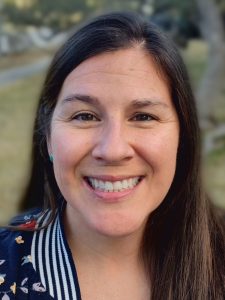
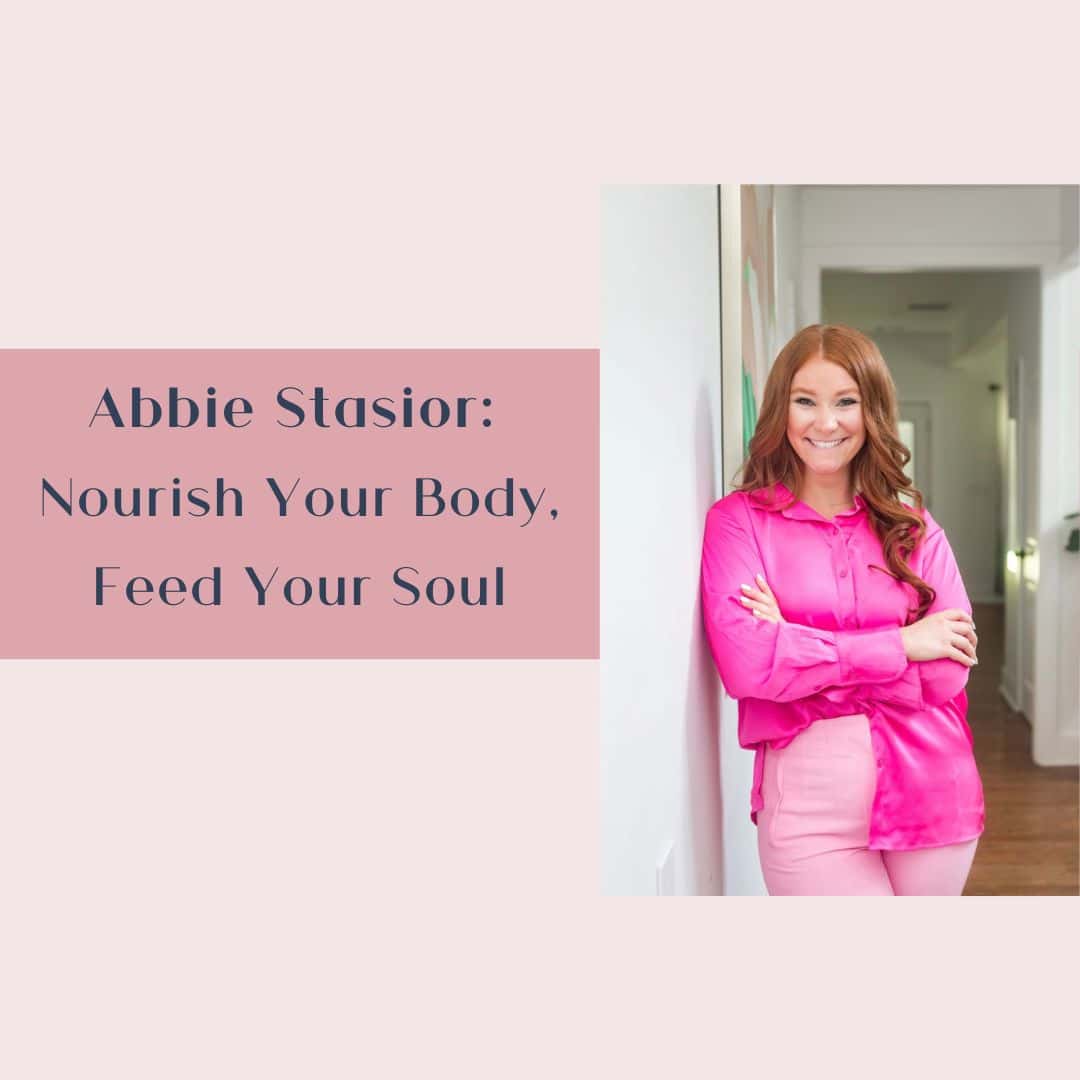
Well, welcome everyone. It’s great to have you guys today on the show and I am excited. I have with me today, Abby Stassier. She is a registered dietitian who uses her education to educate women and coach them on how to eat and live in a way that honors the Lord and just really helps us find rest and wellness. So we’re excited. Thank you so much for being here, Abby and welcome.
Abbie Stasior (00:01.955)
Hi.
Abbie Stasior (00:29.781)
Yes, Candace, thank you so much for having me. I’m really excited to be here.
Candace Nassar (00:33.504)
Yes, we’re so excited. So before we get started, I always ask our people, our interviewees to introduce themselves and just tell us a little bit about your background and who you are.
Abbie Stasior (00:44.867)
Yeah, absolutely. So like you said, I’m a registered dietician and I now specialize in working with Christians, specifically Christian women on how to heal their relationship with food, improve body image, even improve their relationship with exercise with a faith-based approach. But it always starts off that way. I was not always so close to the Lord, wasn’t always spirit-led. I have been in business now for seven years counseling people, but it’s only been in the last
one and a half to two years that my business has been faith-based. And my business had a radical conversion. Yeah, yeah. And I didn’t even know that I was going to be a registered dietician. I kind of fell into this path. I grew up in a family of doctors, very high achieving.
Candace Nassar (01:23.144)
I love that.
Abbie Stasior (01:38.659)
You know, very perfectionist, you know, parents with very high expectations. And basically everyone in my family is a physician or surgeon. So I always thought that I was going to be destined for medical school. Yeah. But my first encounter with the Holy spirit was in or near Muir Woods. Are you familiar with that in San Francisco? I had a pretty radical, it’s kind of a long story. We don’t have to get into it all now, but.
Candace Nassar (01:49.358)
Wow.
Candace Nassar (01:57.262)
Yes, out in California? Yes, I’ve been there.
Abbie Stasior (02:07.171)
That was my first encounter with the Holy Spirit and I came out of Muir Woods, out of… The Lord really just can speak through nature. I just came out of that experience knowing I cannot go to medical school. This is not the right path for me. I am trying to please people and this is not what the Lord has for me. And so a couple months after that, I ended up feeling very led to another Holy Spirit moment. And I grew up Catholic. Like I grew up…
Candace Nassar (02:15.394)
Mm-hmm.
Candace Nassar (02:21.954)
you
Candace Nassar (02:26.294)
Mm-hmm.
Abbie Stasior (02:36.451)
in the church and around the faith, but I wasn’t familiar with the Holy Spirit, didn’t have a relationship with Jesus. So this was all very new for me, but it’s a very strong conviction. And at that time, a couple of months after that encounter in Muir Woods, I invested the entirety of my savings to launch my online business. It took a lot of faith and my family, they didn’t talk to me for months. They were very confused about what was going on.
Candace Nassar (02:56.12)
That’s faith.
Candace Nassar (03:01.486)
Hmm.
Abbie Stasior (03:06.189)
You know, I just couldn’t really explain it, but it was just that I felt led. And over the course of the last seven years, the Lord has taken me and my business on a journey. When I first started coaching, it was very weight loss focused, very “need to stick with your macros and you need to stick with this plan”. I was holding everyone accountable to doing all the things and clients were losing weight. Clients were quote/unquote successful to worldly standards and expectations, but they weren’t able to be successful over the long term. Nothing was able to be sustained. And if they were losing weight, they were gaining that weight back and just in that cycle. And at the same time, you know, I’m trying to run this business and actually getting the data that people weren’t sustaining their results, I was not even sustaining my own results and the business was burning me out. And at the time in a very toxic relationship and it was…
Candace Nassar (03:39.737)
Mm-hmm.
Abbie Stasior (04:04.993)
I was just putting so much of my worth in the wrong things. Yeah.
Candace Nassar (04:09.022)
Mm-hmm. Yeah, we all tend to do that. It’s so easy. The world is constantly screaming at us that we need to look a certain way, act a certain way, achieve certain things, and that’s where our value comes from. And so how did you get to the point where you knew that was a lie?
Abbie Stasior (04:21.955)
Right.
Abbie Stasior (04:26.433)
Yeah, well you know the Lord will make you lie down in green pastures, for real. He will just keep pursuing you and I am so grateful that He kept pursuing me and it wasn’t until, with that relationship that I mentioned, that, you know, we were about to get engaged but he was Jewish and I was still Catholic. I was going to Catholic Mass every week and you know it really came out as we’re starting to have those pre-marital conversations.
You know, what religion are we gonna raise our kids? And he was very resistant to doing anything Christian and wanted to raise our kids Jewish. And so ultimately the relationship ended and I praise God for that because then I started to, like that was the first time I really defended my faith. And I said, “Look,I just can’t, I need to do something with my faith. I can’t raise kids not knowing Jesus at all.”
So that actually led me to the Lord. even with COVID too, the Catholic church closed down. So then I started listening to different sermons online and I loved it. And through some of those sermons, I learned about how to hear from God and how to read the Bible. I got in my first virtual small group and then that led me to get baptized. There were so many different things. And…
Candace Nassar (05:42.478)
God moments, lots of God moments.
Abbie Stasior (05:44.599)
So many God moments. Yeah, but he just kept pursuing me and connecting me with the right resources and so many divine appointments. And it was at a Christian entrepreneur conference in Nashville that I received my calling. And it was really cool because I’ve been to so many business conferences in the secular real world for entrepreneurs. But to go to one for Christian entrepreneurs was really special because we were worshiping in between the different speakers. And that’s when the Lord spoke to me and said, “I’ve called you to deliver people from eating disorders.” And I just started weeping and it was a really powerful moment. And that’s when I knew I really needed to make my business, my business faith-based.
Candace Nassar (06:25.484)
You know what I love about that so much, Abbie, is that you were willing. God called you and you said “yes”. And what our listeners don’t know, but I do, is that you suffered with your own eating disorder. And I love that so much because God sometimes, I mean, well, the Bible says every time when we’re going through hard things, He comforts us so that we can comfort others.
Abbie Stasior (06:40.152)
Yeah.
Candace Nassar (06:52.928)
And so you’ve had a bad relationship with food and exercise where it controlled you and you realized that you had to surrender that to the Lord. You want to just share a little bit about that?
Abbie Stasior (06:53.005)
Yeah.
Abbie Stasior (07:04.535)
Yeah, absolutely. So the stress of trying to run my business, being in grad school at the same time, and because I knew I got to a point where I was like, I just can’t keep, you know, running my business all through social media. Like I knew I did want to go back to school. So then, you know, I got the credentials to be a registered dietitian. And the stress of all of that, on top of trying to be perfect and put so much of my worth in how I looked, my body just totally shut down and I could no longer tolerate food and if you have something that like hurts your stomach or makes you bloated or you just have a reaction, you’re kind like, “Okay, well maybe I shouldn’t eat that food again.” So, then you start cutting out foods and it just kept being like more and more foods that I was cutting out. Now I can’t eat gluten. Now I can’t eat dairy. Now I can’t have processed sugar. Like, I can’t have dessert. Okay, now it just got to the point where all these foods were getting eliminated.
Candace Nassar (07:39.192)
Mm-hmm.
Abbie Stasior (08:02.019)
I would have debilitating symptoms when I would have these foods. I mean, just crazy bloating, GI upset, just painful stomach pains. I almost felt like somebody was stabbing my stomach at some point. It was really bad. And I was diagnosed with SIBO, small intestinal bacterial overgrowth. So I had IBS and also SIBO at that time. And they just start eliminating foods.
Candace Nassar (08:09.963)
yeah.
Candace Nassar (08:19.502)
Mmm.
Abbie Stasior (08:31.283)
I was, I got down to only being able to tolerate white rice, boiled chicken, and sometimes green beans. And I ate that way for about a year. It was so bad. Yeah, it is. And it’s very isolating and you know, it was, it was a really hard time. Then my doctor was like, look, you know, we might even have to….
Candace Nassar (08:43.47)
Yeah, that’s a trap. That is a real…
Abbie Stasior (09:00.291)
put you on a liquid diet for a bit and really just give your gut a break and not eat anything and then see what we can tolerate as you move forward. So I said, okay, but that liquid diet really is what sparked a lot of my eating disorder and disordered eating after that. So I would not recommend that and I would run for the hills if someone tells you to go on a liquid diet. And it was hard because I kept losing weight with that. So there was a part of my brain that was like, oh, this is good. Like maybe this is…
Candace Nassar (09:21.934)
you
Abbie Stasior (09:28.995)
Maybe this is healthy, even though I was only consuming about 500 calories a day for three weeks being on this liquid diet. And it was really bad, but there was a part of me that was like, oh, this is good because I’m losing weight.
Candace Nassar (09:42.168)
Well, right, and you were getting compliments too, where people are looking and saying, you look amazing. What are you doing? And so that feeds that whole thing if you’re addicted to approval.
Abbie Stasior (09:44.737)
Yes.
Abbie Stasior (09:48.076)
Exactly.
Abbie Stasior (09:52.102)
Which I definitely was. I was seeking approval in just all of the wrong places. And yeah, so it was really bad. And so then once the liquid diet finished, you started working foods back in, but still things that I ate kept hurting my stomach. So I really wasn’t able to tolerate things. And I was afraid to eat because I wasn’t sure how it was going to impact my symptoms. And I just didn’t want to feel…
I didn’t want to be in pain anymore. I mean, who wants to eat something and be in pain, right? Like I just want to know what it was like to eat a piece of toast and not be like, writhing in pain on the ground. And it had been so long since I could, you know, eat food in peace. So then that’s when my eating disorder developed. So then I developed ARFID, which is “avoidant and restrictive food intake disorder”. So it’s not anorexia, it’s not bulimia.
Candace Nassar (10:27.523)
Mm.
Abbie Stasior (10:41.377)
But it’s another type of, a lesser known eating disorder where you really have that fear of food. So then you start restricting and it’s really out of fear and previous negative experiences. So a lot of children get diagnosed with ARFID because they have, maybe they choked on food when they were younger or they had it really bad, like they had a stomach bug or food poisoning where now they’re throwing up. And sometimes that can trigger
Candace Nassar (10:45.709)
Mm-hmm.
Candace Nassar (10:57.505)
Abbie Stasior (11:09.589)
a fear of food and a fear of eating. So then you just avoid foods altogether. Sometimes things with certain textures, but sometimes food altogether, which then obviously is not good for anybody, but especially not good for a child in development, right? So that took a while. And at this time, as I’m trying to run my business and I’m trying to heal all these good health issues, I’m also leaning into the Lord. And this is also around the time with COVID as I’m starting to…
Candace Nassar (11:20.664)
Not good.
Abbie Stasior (11:37.207)
you know, get in my Bible and get in my first virtual small group and, you know, really lean into the Lord. I’m growing in my faith at the same time. The Lord delivered me from that fear of food and all of those symptoms. I don’t have any food restrictions now. I can eat gluten, I can eat dairy. And, you know, I do the dairy a little bit in moderation. Like I have a couple of foods where I like, I can eat that, but it doesn’t make me feel great, especially in large amounts. So you use discernment in all of that.
But I mean, I have, and I have such peace around food and that truly came from the Lord surrendering all of this to Him and looping Him into that and letting go of food rules. Yeah, it really was, I had such a fear of food and it was impacting me socially and cognitively. When you’re not eating enough food, you’re just mentally, you’re not there. Like your brain needs food to eat and to function.
Candace Nassar (12:17.134)
That’s great.
Candace Nassar (12:26.808)
Right?
Candace Nassar (12:33.004)
Yeah, and I just love the fact that you found that freedom in Christ by going to Him and just seeking Him and surrendering to Him. That’s really, I mean, all of us have different strongholds, if you will. And that was the one for you. Now not only do you have freedom, but you are helping others gain that freedom. Even if they don’t have an eating disorder, it’s still a trap of, like you said, dieting and back and forth and not really getting that freedom and feeling like you have the worth that only if I’m thin, you know, or something like that. So, all right, well, thank you so much for sharing that because to me, that gives you just a ton of credibility as you start to talk about how we can have a better relationship with food because you’ve learned that. So let’s talk about Jesus having a healthy relationship with food and that’s what you obviously learned and studied your Bible.
Abbie Stasior (13:08.759)
Yeah, of course.
Abbie Stasior (13:20.771)
Yeah.
Abbie Stasior (13:25.677)
Yes, he did.
Candace Nassar (13:29.76)
And so what are your top five tips to help us have a better relationship with food?
Abbie Stasior (13:35.447)
Yes, yes. There are so many tips. I mean, the Bible is just filled with instructions for how to eat. We go to the Bible for instructions on how to do everything else in our lives. And, I don’t know why we’re either resistant or we don’t know that we can go to God for how to eat and just things with our health, but it is packed in there. And so there’s a lot of tips that I can give, but I think studying one scripture, I think can be really helpful for people and give people some tangible places to start in starting to heal their relationship with food and.
Candace Nassar (13:53.965)
Mmm.
Abbie Stasior (14:10.339)
What I’ve found in my own experience and just through conversations with the Lord, it’s not always what we eat. I think people, especially when they see a dietitian, they’re like, okay, what can I eat and what can I not eat? What’s good and what’s bad? Jesus flips that around and I’ll show that in how he models how to eat through when he feeds the 5,000. It’s not always what we eat, but how we eat. And I’ll be honest, my symptoms, the way that I felt peace with food, I had to slow my whole lifestyle down, I had to slow myself down and slow myself down with meal times. So let’s look at where Jesus feeds the 5,000. This is in Luke 9, obviously in all the Gospels but I like it. In Luke 9 let’s start with verse 14, so 9:14 and it says about 5,000 men were there and we know that there were more people than just men there so it was probably over 5,000.
Candace Nassar (15:05.922)
Yes.
Abbie Stasior (15:06.467)
But he said to his disciples, have them sit down in groups of about 50 each. The disciples did so and everyone sat down. Taking the five loaves and the two fish and looking up to heaven, he gave thanks and broke them. And then he gave them to the disciples to distribute to the people. They all ate and were satisfied. And the disciples picked up 12 baskets full of broken pieces that were left over.
So here in this scripture, I think we just kind of breeze past it and we’re like, my gosh, look at the miracle that Jesus did. But this is our recipe for how Jesus wants us to approach meal times. So first he said he wants everybody to sit down, get in groups about 50 each. He wants everyone to be in order. We have a God that is a God of order. So, he wants us to sit down. How often are we eating standing up, walking around the house?
Candace Nassar (16:05.463)
In the car.
Abbie Stasior (16:06.307)
In the car, bent over the sink. Like we are just eating on the go. I have a lot of patients that are moms that will say, “Oh, I’ll let the kids eat. The kids are sitting down, but I’m standing up at the counter doing something or they’re eating at the table, but I’m going off doing something else because they’re kind of occupied so I can go do something else and get something else done. And then I’m kind of picking off their plates like whatever’s left and that’s my meal. That’s not what Jesus is modeling here. Everyone is to sit down, be together, be orderly and to make that a discrete meal time. And a lot of resistance that I get with just that first point is, I have so many other things to do. We need to start flipping the script and seeing meal times as a time of consecration to the Lord. Anything that we set in consecration, meaning it’s something that we set aside for the Lord making it holy. Because whatever we set aside for the Lord and make it holy, like He’s gonna bless the rest of it.
Candace Nassar (16:51.854)
Mm-hmm.
Abbie Stasior (17:04.673)
So if you set aside that time to be with the Lord and to honor God by eating and fueling your body, He’s going to bless the rest of your time. He’s gonna give you a surge of energy. Never mind the fuel, the food is gonna give you some fuel, but the Lord is gonna give you that supernatural surge in productivity and energy and just efficiency because you honored Him in that time.
Candace Nassar (17:28.79)
I love that. There’s a lot of situations in our lives where we have to trust God and make that sacrifice, if you will, to do it as He says. Then, if we do that, then He blesses us in return. So to apply it to mealtime is genius. I love it.
Abbie Stasior (17:46.979)
Yeah, absolutely. It’s an act of faith,
Candace Nassar (17:51.17)
Yeah. And okay. So, then I love that. So we’re talking about how to eat in a rest, more of a restful posture. What else do we learn? Intentional.
Abbie Stasior (17:54.147)
Please stay tuned.
Abbie Stasior (17:59.821)
Yes, and intentional. He took the five loaves and the two fish and he looked at them and he gave thanks and he broke it. So he blessed the meal. He prayed over the meal. Now, not everyone’s praying over their meals. And I think that this is something obvious and that we skip like, like my bad, you know, just kind of forgot, but we need to be intentional. We had to pray before everything that we do. And I do have a lot of patients that are currently praying over their meals, but I always ask patients, “What do your prayers look like?”
Candace Nassar (18:08.91)
Mm-hmm.
Abbie Stasior (18:28.419)
And sometimes they’ll just say, like, “Lord, bless this meal, bless this food.” Or, you know, sometimes people will go a step further, “Allow this food to nourish me so that I can continue to be your hands and feet. Love that, and I think those are really good prayers. Lord, bless this meal and allow this food to be so that I can be your hands and feet.” But now I think we need to get a little bit more specific. The things that you are struggling with, with your health, with your relationship with, this is a perfect time to pray and posture your heart towards the Lord.
So a lot of my clients that struggle with binge or emotional eating, pray through that, pray that the Lord delivers you from that, pray that He gives you the patience to not rush through this meal, the self-control to stop when you feel comfortably full and not eat past the point of comfort. It’s like, get more specific, this is such an opportunity to pray better prayers and we’re rushing through it or missing it entirely.
Candace Nassar (19:21.134)
That’s so good. Did not think of that. So good stuff.
Abbie Stasior (19:23.939)
Yeah, yeah. So it’s a really good time to personalize it as well. And you know, obviously making sure you distribute it to people, sure everyone has enough, everyone’s you know, kind of building their plate. And this is also a balanced meal as well. We have five loaves and two fish. So we have carbs and we also have protein as well. Now wish there was a little bit of fiber in there as well. But that’s how we started building our
Candace Nassar (19:48.566)
Well, you know, back in those days, I know that the bread was very different than it is today, right? So I’ve just read that personally, but yes. It was a nutritious meal, good.
Abbie Stasior (19:55.554)
So true.
Abbie Stasior (20:02.411)
Nutritious and balanced meal. Everyone ate until they were satisfied, not until they were stuffed.
Abbie Stasior (20:13.267)
And I know that sounds so simple, but how often do we eat meals? And we’re like, writhing over in pain. And we’re like, that’s just how it is. And it’s like, “No, that’s not honoring the body.” And sometimes that just comes as a natural consequence. I would say the two main things why we overeat is that we show up to the meal too ravenous and we are urgently hungry.
Candace Nassar (20:21.133)
Yeah.
Abbie Stasior (20:41.315)
So we eat really fast and sometimes we build up our plates, you know, they’re too big because we’re so hungry. So we’ve probably waited too long to eat. And sometimes we do that because we’re like, oh, you know, I don’t want to ruin the meal. Like we’re going out to this really fancy dinner or like Thanksgiving, like, we’ve spent all this time preparing. So a lot of people don’t eat breakfast on Thanksgiving. The first thing they eat on Thanksgiving is at like three or 5 p.m. That’s way too long to go without eating. And of course you’re like a couch potato after and in so much pain.
So we need to be eating more consistently and that’s gonna allow you to show up to that meal comfortably hungry, where you’re like, “Yeah, I could eat now.” Not,” Oh my gosh, I need to eat this now.” So there really is a difference there because if you show up to the meal comfortably hungry, pleasantly hungry, then you’ll be able to slow down when you eat and really get a sense of your emerging fullness to be able to stop….
Candace Nassar (21:10.531)
So funny.
Abbie Stasior (21:36.225)
when you felt like, “Okay, that was my last bite.” But if you’re going, if you’re preparing for your next forkful, as you still have food in your mouth, you’re eating too fast.
Candace Nassar (21:49.88)
Yeah, I know my husband eats really fast and it always bothers me because then he ends up having stomach issues and digestive issues. And I’ve talked to him and it’s just the way he grew up- seven brothers or six brothers. It was like you eat or be eaten. So, but you know, that’s a habit.
Abbie Stasior (21:49.987)
Thank you.
Abbie Stasior (21:58.615)
Exactly.
Abbie Stasior (22:06.691)
And a lot of it does come from our childhood habit and just that scarcity mindset. But now he doesn’t have to live like that because he has enough and he has the time. And I think sometimes that can be an indicator that we need to heal something in that area from our past or our childhood, but also trusting that the Lord will provide and that there is enough and that there’s like sufficiency there. So sometimes we wait too long to eat, we show up too ravenous and then we eat too fast.
Candace Nassar (22:27.79)
Yeah. Yeah.
Abbie Stasior (22:34.337)
It takes 20 minutes for our body to start sending us hunger cues. So if you eat in less than 20 minutes, then you’re not even giving your body an opportunity to send you fullness cues.
Candace Nassar (22:46.294)
Okay.
Abbie Stasior (22:48.173)
So we don’t really know when to stop eating. And so a lot of people will, you know, complain, if I honor my hunger, I just keep gaining weight. It’s, when you’re not honoring your hunger, you’re eating so much at one time. It’s better to eat more frequent, smaller meals.
Candace Nassar (23:04.876)
Yeah, that’s what I do actually. So let me ask you, a lot of times you hear people today talking about intermittent fasting and a lot of people skip breakfast, you know, because they think they’re doing themselves a favor. Why don’t you talk about that?
Abbie Stasior (23:07.127)
Yeah, that’s good.
Abbie Stasior (23:17.261)
Yeah.
Abbie Stasior (23:22.103)
Yeah, I’m not a huge fan of intermittent fasting now. I think for some people, maybe in some seasons it could be good, but I think by and large we need to be eating breakfast and honestly even Jesus modeled eating breakfast. When we look at after, you know, he died on the cross, resurrected, and he comes back to visit his disciples, he actually models another fish catching miracle in John 21:4-14. He comes back and most people focus on that fish catching miracle and they focus on, you know, that, he had another net of fish and blah, blah, but he was inside cooking the disciples breakfast and he chose to come back and share that meal with them in the morning. So Jesus models eating breakfast and we can assume that that was probably his regular rhythm.
As he was coming back, he wanted to show that this was Jesus because when they saw the fish-catching miracle and then they come in they’re like, “Wow, that’s Jesus coming back.” So, they recognized him. So that was probably typical for Jesus to be having breakfast at that time with his disciples and that in that meal time. So when we don’t have breakfast, especially if we don’t have breakfast, but we just have coffee, that drives our cortisol up. That is our stress hormone.
And then that drives our blood sugar up. So you see a lot of people with high cortisol also may have a hemoglobin A1C or blood sugar in like a pre-diabetic, even diabetic range. If it’s like long untreated high cortisol. So it stresses the body out way too much. And it’s really not good for us internally. So by eating something in the morning, especially something with protein, it helps to decrease our stress levels and already kickstart our metabolism.
So if you’re looking to lose weight and just obviously have more peace around food, it’s better to honor your hunger. Now the resistance that I get there is always, well, if I start eating earlier in the morning, I’m gonna be hungrier throughout the day. And I say, “Yes. That’s a good thing.” The world does not want you to honor your hunger. It sees hunger as bad.
Abbie Stasior (25:39.105)
God designed our bodies to be good. Hunger is a natural biological cue to fuel your body. And that’s how God designed our body. So if you’re not trusting your body’s biological cues, somewhere in there, you’re relying on your own understanding of health and not trusting God.
Candace Nassar (25:58.36)
Well, and I can see how that would just affect our relationship with food too, because you’re trying to say, “Well, I can control my hunger.” And then it becomes, you know, I’m going to control, I’m going to skip lunch. I’m going to see how far I can make it, which I mean that I’m not talking about spiritual fasting. That’s a whole other thing. Yeah.
Abbie Stasior (26:17.015)
Right, it’s outside of regular intermittent fasting. Most people might see weight loss with intermittent fasting, not because they’re eating in certain windows, but just because they’re eating less overall. So then it’s like, well, then maybe you’re seeing results from a caloric deficit, not because of the specific eating windows.
Candace Nassar (26:34.018)
Right. And also your energy level isn’t going to be, you know, more, if you’re eating properly and frequently, your energy level is more stable and you can just feel better throughout the day. Right.
Abbie Stasior (26:47.075)
Then you eat less at each meal time so that you’re not getting overly stuffed. And what you see, because you eat smaller, more frequent meals, you don’t eat as much at each meal time because it takes about six to eight hours for food to leave your stomach. So if you’re eating every three or so hours, you still have food in your stomach that’s digesting that hasn’t left yet. So there’s not enough room there. Like if you really are honoring your hunger and your fullness cues, you’re not gonna eat as much at each meal time.
And that’s better to keep your blood sugar balanced. You’re not gonna have those spikes or those dips. And it’s when we have the dips that we typically make, I would say, more, I don’t wanna say poor eating choices, but food choices that aren’t as intentional. It’s really hard. Like if you think about when you run out of gas and literally the gas tank, it’s not just fuel low, but you’re literally on zero. You’re…
my gosh, you’re so stressed out, you gotta pull into the first gas station that you can find, even if it’s, you know, higher prices or an inconvenient intersection. You’re like, “I gotta get in here now.” So, that’s how we are when we have low blood sugar and we need food instantly. You’ll take whatever you can get. But if you fill up your gas tank when it’s like a quarter full or like half full, you’re like, “Well let me drive a little bit out of town. That’s a little bit cheaper at this gas station.” I’ll do it at a time that’s convenient. I
It’s a more pleasant experience when your tank isn’t completely empty and you can make an intentional choice on where you get your gas and at what time. You don’t really have that option because if we’re relating this back to hunger, your primal hunger takes over when your blood sugar is so low. You don’t make an intentional choice. Your body literally takes over.
Candace Nassar (28:26.21)
You know, and here’s another thing too. You can avoid the “hangriness”, right? Because how many, I mean, I definitely get that low blood sugar “hangriness” and that’s one of the reasons why I try to pace my eating a little bit better. So, okay. So, let’s talk about our kids and how we can help our kids make better food choices.
Abbie Stasior (28:30.083)
Yes!
Abbie Stasior (28:54.327)
Yeah.
Candace Nassar (28:56.312)
How can we teach our kids the simplicity of eating whole foods, that kind of thing.
Abbie Stasior (28:59.957)
Absolutely, I think we need to observe them and actually let them be the teacher and if you look at kids and how they eat without you interfering, you’ll see that they, when they’re hungry, they’ll tell you that they’re hungry. And when you don’t interfere, they’ll stop eating when they’re comfortably full and because we’re designed that way.
The Bible says to have a childlike faith and that children are greatest in the kingdom of heaven. And so there’s a lot that we can learn from children and children are naturally intuitive eaters. They have that body attunement and then they honor that. But it’s when we as parents try and manipulate that situation or rely on our own understanding and impose that onto the children, things get really disordered. And so I think there’s a lot that we can learn from children and we can observe.
One of my colleagues in the field just posted about an incident that happened, not necessarily incident, but a situation that happened with her daughter where they got donuts and they had already eaten a full breakfast and then she let her child have a donut. Then the child asks for another donut. And she said, I was really discerning at that moment. I knew logically my child does not need another donut. She doesn’t need that much sugar, like she’s gonna be fine. She already had one. Should I say yes or no at that moment? She ended up saying, yes, you can have another donut. And she said that her daughter took one bite of it. It was a very small bite. And then she just set it down and then started dancing in her room. And she didn’t even finish the donut. She did not have the second donut other than just that little bite. And she said, “You know, I’m so happy that I did that because, you know, number one, it really showed me,
my daughter actually has those intuitive cues. She knew that she didn’t need it and didn’t keep eating past the point of comfortable fullness. And she really honored her body in that moment, so that was good for me to see.” But also, even if the daughter had eaten the whole donut and then felt sick after and uncomfortably full, that would have been a really good teaching moment. And you could come from, as a parent, a place of curiosity, like…
Candace Nassar (31:10.253)
Yeah.
Abbie Stasior (31:14.645)
“Okay, well, you know, how is your tummy feeling now? And you know, why do you think that is? And maybe next time, you know, we won’t have a second, maybe one is enough.” And so it starts to teach the child what’s a good portion size for them in making those eating choices. In that scenario, you know, and she even said in her post, she’s like, “Look, I’m not saying to say yes to your child all the time. I mean, I use discernment, but in that moment, I’m actually happy that I did, because it taught me my child actually does, she has that inner wisdom that I’ve gotten away from through my experience with dieting.” And another really helpful tip that came up, because I’m not at that life stage yet. I do counsel a lot of moms, but I also defer to other dieticians that are moms, and also God’s word to help with that. And I was at a dietician conference last fall, and they were talking about feeding children, especially picky eaters. And one thing that they said was really effective,
Candace Nassar (31:48.237)
Yeah.
Candace Nassar (32:10.114)
Yeah.
Abbie Stasior (32:12.169)
Start labeling food neutrally and not to say that something is good or bad or healthy or unhealthy even, but to label that, like to pick out the attributes of that food and start to label it that way. So for example, if a child is like, “Mom, mom,I really want ice cream.” And you’re thinking in your head, I don’t want them to have ice cream right now because they’re going to be bouncing off the walls. Or maybe you don’t even have any ice cream and you don’t want to go out to get it. Okay.
Candace Nassar (32:18.923)
Ooh.
Abbie Stasior (32:40.515)
So instead you could say, “Okay, it sounds like you want something that’s soft and sweet. We don’t have any ice cream right now, but I have a banana. A banana is also soft and sweet. What do you think about something like that?” Right, I was like, that’s genius. I gotta write that down and share that with everyone. So if you could start to, especially, I think parents could even start practicing this with themselves.
Candace Nassar (32:52.984)
That’s so good.
Abbie Stasior (33:06.535)
You’re hungry, start to ask yourself, “Okay I’m hungry, what am I hungry for? What’s the vibe that I’m going for? Do I want something that is warm, cold, salty, sweet, savory, creamy, hearty? Like what is the vibe that I’m going for and can I honor that in some way?”
I’ve known patients say, “Okay, but what do I do when I’m really craving pizza?” And I was like, “Well, let’s break it down. You know, that pizza is savory. You have that red sauce, that tomato, that kind of like acidic, but maybe with the cheese, but with the carbs, you know, just kind of that whole combination. Could you maybe take a protein pasta, like a chickpea or lentil pasta with marinara sauce and put some Parmesan cheese on top, maybe with chicken or shrimp in there for a little extra protein, and a side of steamed vegetables on the side, get some fiber in there or put something in the sauce, maybe some chopped up spinach in the sauce?” And they’re like, “Oh my gosh, I didn’t think that’s the same flavor vibe, but I don’t have to spend money to go out and get a pizza and have that delivered, but I still have that same flavor profile.” Now it’s more nutrient dense.
Candace Nassar (34:09.356)
Yeah, yeah, just having understanding of the choices that can substitute for whatever the craving is. That’s really good. And I like that. I had a really picky eater and that would have really helped. So I think that’s really good. Well, so before we’re kind of getting down to the end of our interview, but I did want to just spend a bit of time.
Abbie Stasior (34:16.279)
Yes, yes, labeling.
Abbie Stasior (34:23.745)
Totally.
Candace Nassar (34:34.19)
Okay, because you alluded to it with mealtime, even if it’s just slowing down and sitting. So, we know that burnout is such a big issue today in our world. People are so stressed, so anxious, depressed, all of the things that go along with, I mean, we know society. We talked earlier about how we feel value and that stresses us out and we just were obsessed with productivity.
Abbie Stasior (34:39.587)
Yeah.
Abbie Stasior (34:48.547)
Yeah.
Candace Nassar (34:59.66)
You know, like you were even saying how moms feel, “Let me just go do something else while I’ve got my kids sitting at the dinner table.” Well, that’s a great example of how you’re going to burn out. And, and so you, you talk about this, the beautiful thing that Elijah learned when he was in, running from Jezebel, in I Kings 19 and just how, what he learned and how he dealt with that. So I would love for you to share a little bit about that.
Abbie Stasior (35:05.944)
Right.
Abbie Stasior (35:29.185)
Yeah, absolutely. I call this the “Elijah treatment” that we all need because so often, and especially mom, I mean, we are catering to so many, so many people and just trying to keep up with with all the things and steward a home and you have so many to-do’s and expectations and things that are rattling off in your head all the time that it can be really easy to neglect ourselves, which first I always want to remind people of the great command.
Candace Nassar (35:32.258)
Yeah.
Abbie Stasior (35:56.993)
That we are called to love God and love our neighbor as we love ourselves. So we’re not really loving other people well if we’re not taking care of ourselves. And we all know, I’m sure moms have heard it time and time again, that we can’t pour from an empty cup, but that’s exactly the situation that Elijah got himself in. And he’s running, running, running, so burnt out with his ministry and just being the prophet that he was. And he had a complete mental breakdown.
Candace Nassar (36:04.942)
That’s right.
Abbie Stasior (36:23.499)
And again, the Lord will make you lie down in green pastures. And, I don’t want us to get to that point where the Lord has to force us to now lie down or like we get sick and then we’re forced to take time off or delegate. We want to develop better rhythms, but Elijah hadn’t quite gotten to that point yet. And so he was completely burned out. He was actually crying out to the Lord to have the Lord take his life even at that point. And it was just like, I can’t keep going on.
Candace Nassar (36:26.143)
Mm-hmm.
Abbie Stasior (36:51.839)
And the Lord sent in His goodness, His angels down and was like, “Okay, we’re going to give you something to eat and we’re going to have you take a nap.” Elijah wakes up from that. Okay. Gives him some more bread, gives him something else to eat, and then has him take another nap. And then at that point, Elijah cried out to the Lord again and said the same things. It’s literally copy and paste the same paragraph again. He cried out to the Lord, the same thing, but then he was able to hear….
Candace Nassar (37:00.782)
You
Abbie Stasior (37:20.929)
the Lord’s gentle whisper and the Lord’s answer. And the Lord had probably been speaking before, but Elijah couldn’t hear Him. So sometimes we’re running around like a chicken with its head cut off. We really sometimes just need a nap and something to eat and to keep us fed to fuel our bodies. And we forget about that with all the things that we have to do. And so I think to prevent that we need, in a regular eating schedule for sure. And we need convenient nutrient dense meals.
Candace Nassar (37:28.376)
Right.
Abbie Stasior (37:50.867)
And you can rely on a protein shake or a protein bar in a pinch. You know what I mean? Like, I think we figure out what you like, what’s gonna work in your home and with your budget, make those things convenient. I think, especially in the Christian community, we like to demonize a lot of processed and convenience foods. But sometimes, especially as moms, you gotta rely on those sometimes in a season so that you’re getting fed consistently.
Then we need rhythms of work and rest. Elijah probably could, I don’t know if he was sticking with the Sabbath, but if he wasn’t, we gotta be very diligent with taking a Sabbath, having a quiet time with the Lord, having just times to nap and to rest, to have that counterbalance. The world glorifies hustling and striving. Go, go, go, but it’s rest that the Lord declared holy.
Candace Nassar (38:45.07)
That’s right. I love that. And just getting out in nature, that’s a big one for me. And getting our kids out in nature and just, you know, rejuvenating in those kinds of ways. We want to keep the kids busy, but we can also rest when we go out and do something like that. That’s really good. Yeah, I like that.
Abbie Stasior (38:50.539)
Yes. Yeah.
Abbie Stasior (39:06.967)
Yeah, I agree. And that can be a family affair as well. I think sometimes when we hear, we need to practice Sabbath, number one, it’s one of the commandments. It’s the fourth commandment. So we really are commanded to rest. And I think we shouldn’t see it as like, I have to do this. No, we get to do this. One thing I just read in Genesis recently was the Lord blessed the animals and said, “Be fruitful and multiply.” The Lord blessed humans and said, “Be fruitful and multiply.” Then he blessed the seventh day and declared it holy.
So he blessed it. The Sabbath has that procreating, multiplying effect. So your rest can bleed into the rest of your weeks that you’re operating from a place of rest. And that will help you to have better rhythms of rest and practices of rest, even at meal times and just throughout your day, you’re not gonna be, we’re all gonna be busy, but we don’t have to be so hurried.
Candace Nassar (39:59.564)
Yeah, I don’t know if you, I’m sure you’ve read the Ruthless Elimination of Hurry by John Mark Comer. Yeah, one of the best books I’ve ever read. I highly, highly recommend it. Matter of fact, we put it on our Top 10 List. We do it every December for MomQ. But yeah, all of those things, those rhythms are so important and they’re just for our physical health and our mental health. God knows, you know, He has….
Abbie Stasior (40:04.097)
Yes, I just finished that recently. I’m like, that’s so good.
Abbie Stasior (40:11.371)
Okay.
Okay.
Yeah.
Abbie Stasior (40:27.255)
Yeah.
Candace Nassar (40:28.738)
the plan and the prescription and we just go try to do it our own way and shock it doesn’t work.
Abbie Stasior (40:30.093)
Yeah.
Abbie Stasior (40:36.929)
Yes, absolutely. I think that book by John Mark Comer is very good. Another one would be Embracing Rhythms of Work and Rest. And that talks about like Sabbath and also taking a sabbatical by Ruth Haley Barton. I love it because she’s a mom, she’s a woman. John Mark Comer is amazing. And the Lord has definitely spoken through him to me directly. But there’s something about Ruth Haley Barton that I’m like as a woman, I just resonate with that.
Candace Nassar (41:06.402)
I’ll have to check that out.
Abbie Stasior (41:06.883)
Yeah, there’s just something about it and she talks about it in her book and I can send you the link for it, too. How to Sabbath with your family and I know John Mark Comer talks about that in The Ruthless Elimination of Hurry, but you know, just reading both books, hearing about that and that it is possible. I think if the whole family like you said goes out into nature and is unplugged from electronics, that day can be such a….
Candace Nassar (41:29.046)
Mm-hmm.
Abbie Stasior (41:32.195)
day of delight and worship and connection away from electronics. And people can kind of do their own things on Sabbath too, but I think when the whole family is doing it, it was really meant to be a communal practice.
Candace Nassar (41:44.782)
That’s right. Yeah, it sure was. So good. Gosh, well, Abbie, this has been a great conversation. How can our listeners learn more about you?
Abbie Stasior (41:54.549)
Yes, I am on Instagram and TikTok @ abbie.stacior. And I also have a podcast, Your Daily Bread podcast that is on Apple and Spotify.
Candace Nassar (42:04.856)
Fantastic. Well, I’ll put all that in the show notes. So thank you so much, dear. I wish you all the best.
Abbie Stasior (42:10.093)
Thank you, Candace.