Candace Nassar (00:00.814)
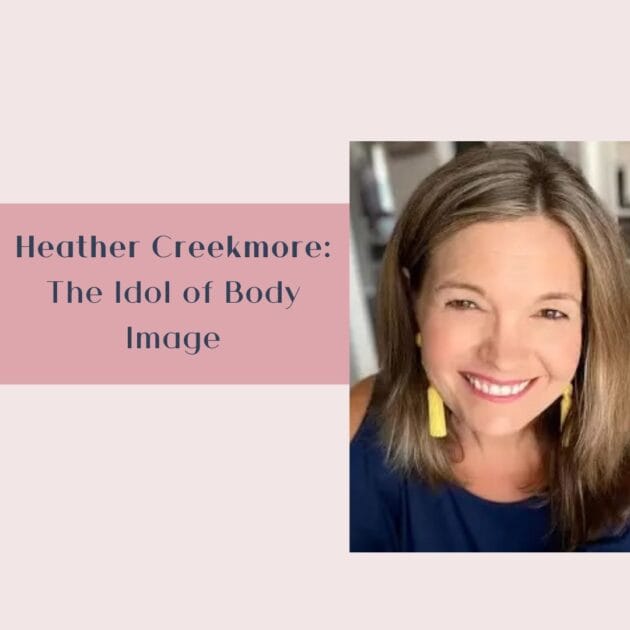
Well, welcome, MomQ family. I am so excited about today’s episode because we have a guest you’re going to absolutely love. Heather Creekmore is back with us. Some of you may remember her from a talk she gave a year and a half or so ago where she opened up about her decades long struggle with dieting and body image. And she vulnerably shared how God revealed that body image was an idol in her life. And then when she was able to surrender it,
He enabled her to find peace. Her story resonated with so many of us and if you want to go back and listen to it, it’s a great episode. It’s way back in our podcast feed and episode 16. But today, Heather is here talking about her latest devotional, Aging Gratefully. And with her signature blend of humor, honesty and encouragement, Heather helps us reframe our views on aging and self-worth, offering a healthy biblical perspective.
We’re also going to discuss the pressures we face around body image and just as importantly, how we can guide our daughters to grow up with a confident positive view of themselves. So get ready for an uplifting, inspiring conversation and welcome Heather.
Heather Creekmore (01:13.98)
Good to be with you, Candace.
Candace Nassar (01:15.832)
Great to see you today, Heather. How’s it going? Introduce yourself to our listeners again and just tell us a little bit about your family and maybe about your ministry.
Heather Creekmore (01:25.137)
So I am a mom of four. My husband Eric is on staff at Hill Country Bible Church and gets to preach sometimes. And we have four kids. Our oldest is graduating this year, so I’m in the thick of it, Candace, but they are 18, 16, almost 15 and 13. Four teenagers.
Candace Nassar (01:41.467)
wow.
Candace Nassar (01:48.642)
Wow. My goodness.
Lots of fun.
Heather Creekmore (01:54.065)
Crazy train. It’s good stuff. Yeah, and I started, oh goodness, about 11 years ago now. Started just talking to women’s groups and sharing my story around body image issues. And that led to something I never expected or planned on happening, which was writing a book on the topic of body image, my first book. And then since then,
Candace Nassar (01:56.898)
No.
Heather Creekmore (02:22.991)
God’s just given me the opportunity to not just write books, but I also have a podcast where I’m encouraging lots of women around the world every week. and then I’m coaching, as well. doing body image coaching for women where we work one-on-one together and kind of dig into their story and, know what’s keeping them stuck with body image issues.
Candace Nassar (02:28.163)
Mm-hmm.
Candace Nassar (02:43.454)
Mm, so good. And do you still homeschool?
Heather Creekmore (02:47.27)
Only one. I’m down to one. So the rest of them are in school now.
Candace Nassar (02:48.512)
Okay.
Candace Nassar (02:52.842)
Yeah, I was going to say otherwise, you know, I’m going to just be, you know, worshipping, just kidding, but that’s incredible. That’s incredible. Well, I’m so glad to see how God is blessing your ministry and I can see why because there is a huge need for that, especially in the Christian community where, you know, we just don’t know that freedom that we can have in Christ from that. So why don’t you tell us what or why you see
Heather Creekmore (02:59.79)
You
Candace Nassar (03:21.454)
women struggle so much with confidence in comparison. What is it about women and young girls? I mean, you even tell a story in, well, when you spoke to us a year and a half ago about when you were in third grade and you started comparing your legs to other girls. I mean, what is it? Why do we do that? Why do you think we do that?
Heather Creekmore (03:40.859)
Because we want to know we’re OK. Right? I mean, that’s our heart. Right? Am I worthy of love? Will anyone love me? Will anyone want me? Am I OK? And it’s so interesting to live in the culture we live in. I mean, I had these body image issues. And Candace, I’m 50 years old now. So there wasn’t social media. Like, we only had three channels on our television.
Candace Nassar (03:43.087)
That makes sense.
Candace Nassar (03:54.776)
Right.
Candace Nassar (04:06.69)
Right?
Heather Creekmore (04:09.989)
We watched what was on from eight to nine and that was it. So it’s a different era that young people are growing up in. Just to me, even the technology- we took pictures, right? And you had to wait like a week to get them back from the developer and then you could decide that you looked bad in the picture. So that was like a delayed response, right? But now, we’re taking selfies all the time. You see how you look in pictures. You see how you look on the internet. You compare yourself to how…
Candace Nassar (04:13.207)
WAP.
Heather Creekmore (04:38.573)
You look on Facebook compared to how other people look on Facebook. What’s your life like? And it’s this quest to answer that question. Am I OK? But the challenge for us, I think, as believers is this isn’t the rat race we’re supposed to be in. Right? We’re not supposed to be looking to other people to determine whether or not we’re OK.
Candace Nassar (04:52.681)
Mm-hmm.
Heather Creekmore (04:59.087)
And when we do that, we are kind of subjecting ourselves to their standards. Am I okay according to her standard of beauty? Am I okay according to her standard of how you should parent? Am I okay according to her standard of what your home should look like? And I mean, you can always find someone that is doing better than you. And you can always find someone who’s doing worse than you. So I like to say the comparison ladder has no top wrung. You can keep climbing, you can keep striving, but you will never arrive. So it’s really something that I think as Christian women, we have to be aware of. I mean, yes, we are wired. There’s a social comparison theory that came up within the 1950s. Leon Vestager studied it. It’s a thing. We’re all wired to compare ourselves. But as believers, there’s really only one standard setter, and that’s Jesus. That’s it. God’s Word is our standard.
Candace Nassar (05:54.146)
Amen.
Heather Creekmore (05:57.539)
And so to be spending so much energy and time trying to meet everyone else’s standards and comparing ourselves to those, it’s just really a waste of a life.
Candace Nassar (06:08.354)
Yeah, it’s a trap. It really is. And yeah, I led off by saying how you talked about it being an idol in your life, the body image thing. And why don’t you share just a little bit about that and how God showed you that.
Heather Creekmore (06:22.287)
Yeah, so, you know, just to be clear, I don’t have this dramatic story of coming out of rebellion and doing all kinds of things and then finding Jesus. Like sometimes I wish I did. I was always a little jealous of people with those kinds of dramatic stories. But I was raised in a Christian home. I went to Christian school starting in seventh grade. I went to Christian college. I went to Christian graduate school.
I was a Christian, I believe I followed Jesus, right? But I had this issue and the issue was my body image. I was always dieting, I was always exercising more. I became a fitness instructor and worked in gyms for more than a decade. Like I needed to prove something to myself and everyone else that I was okay physically. And it wasn’t until I was in, I’d say my mid 30s, my husband was preparing to go into ministry.
And so he was listening to sermons and some of them were interesting to me. And honestly, some of them were just not interesting to me. So he’s listening to a sermon by Tim Keller. And I was like, I don’t know if this guy’s really my style, but we didn’t have AirPods back then. So it’s blaring through the house. And again, as I remember standing in the kitchen, I was cleaning the kitchen and I’m listening to Tim Keller talk about modern day idolatry, which reminds me of when I’m raised in the church.
Christian college, Christian graduate school, I know I’m fearfully and wonderfully made. I know that God looks at the heart. I know all of the scripture. So I really believed in some ways that the Bible didn’t have anything else to share with me on this issue. Like this was just my deal, my problem. Like I had my Christian life and eternity was secure. And then I had this other thing that was just a side thing. And as soon as I got that right, you know, then all of life was going to just line up and work magically together. And what God showed me, like through really the teaching of Tim Keller, was that my body image had become my idol. I really did believe that as soon as I got to my ideal weight and got my hair just right and, you know, got all the parts right, the skin right, all the things, that this wonderful world was going to open up for me. I really believed that was going to be my salvation.
Candace Nassar (08:40.11)
Mm.
Heather Creekmore (08:40.336)
I hate to say it this way, but kind of from the hell of this earth, right? I wouldn’t struggle anymore. I wouldn’t feel rejected. I wouldn’t feel pain because I was going to have all this beauty. And so I was chasing that like it was salvation. And God really clearly showed me through Tim Keller’s teaching that I had made it an idol. Like I believe that was a salvation that I needed more than the salvation that Jesus had already given me. And so that was a turning point for me, recognizing that I had a sin problem.
Not just a fix-your-body obsession, but there was actually some sin underneath all of that. And once I was able to kind of do business with the Lord on that, repent, confess, and really, that’s something I have to do daily. I mean, it’s not a one and done. It’s a, “Am I thinking about my body so much today? God, I’m so sorry.”
I’ve gone back to believing that if I was X number of pounds smaller or if my hair was better, whatever, all the things we say to ourselves, I’ve gone back to believing that that would bring me joy, but no, only You can bring me joy. And so it’s been a process, but identifying the idolatry was really where the change started and the freedom really started for me.
Candace Nassar (09:50.67)
I can see that. you know, it’s kind of like on our GPS when we have to re-center, we have to press re-center, right? It’s like a constant thing. And we all have our weaknesses, those things that draw us away from God and we just have to keep re-centering. And that’s a great example. So thanks for sharing that. So I was reading in some of your materials that more than half of women ages 26 to 57 in America fear
Heather Creekmore (09:57.189)
Right.
Candace Nassar (10:18.27)
aging. And so this is very tied to body image, which I can totally see why you wrote on this. but I mean, that’s staggering. And then I looked it up and the industry, the anti-aging industry is something like $17- $18 billion. And it’s expected to go up to 30 billion in the next five years. So yeah, we’re spending a lot of time and money and energy fighting aging. Our culture idolizes youth. So what are the most common lies women believe about aging?
Heather Creekmore (10:55.804)
Well, there’s lots of them, right? And it’s funny, those statistics you just threw out there, we would absolutely ruin the economy if we stopped trying to treat our aging. I mean, it’s kind of incredible in that way. But the economy will tumble if we stop using anti-aging creams and getting Botox and retinol and all of those things. So that’s just a little bit of a decision. But I think we’ve got lots of concerns, right?
Candace Nassar (11:07.562)
It’s, it’s, yeah, it’s really scary.
Candace Nassar (11:17.432)
Mmm.
Heather Creekmore (11:25.018)
The wrinkles or the body parts that aren’t exactly where they used to be or aren’t shaped like they used to be. All of those things are very real. But I think underneath all of those physical concerns, I think really it goes back to those questions of the heart. I think we really struggle with wondering whether or not we’re still relevant. Right. You know, there’s something strange, strange probably isn’t the best word. But you know, when you’re young,
Candace Nassar (11:45.71)
Mmm.
Heather Creekmore (11:55.676)
especially if you’re a young woman with body image issues, to be really, really blunt here, there’s a little charge you get from being noticed, right? And not even necessarily by men, right? That can be part of it, of course, but by everyone, right? Like, oh, you look so cute today. Oh, wow. You always dress so nice. Oh, you get noticed, right? And then one day you wake up and you’re 50 and no one’s saying that to you anymore, right?
Candace Nassar (12:18.22)
Yeah, that validation.
Heather Creekmore (12:25.602)
If they are, there’s these disclaimers around it, right? Like, you look great for your age. Like, why did you have to add that? Or, that’s cute for someone your age. Those kinds of things. So even in our language, we kind of set ourselves in this other category that feels really uncertain as to whether or not it’s still relevant, still.
Candace Nassar (12:32.045)
Gosh, I love that.
Heather Creekmore (12:55.206)
Good, still worthy, still important, like all of those words. And that, I think, is what we’re scared of most. I think that’s why women fight aging. I think on the inside, most of us would never wanna go back to being 20. I know I wouldn’t. And even 30, I wouldn’t go back to 30. So on the inside, we know that we’re…
Candace Nassar (13:12.428)
Right. No. Me either.
Heather Creekmore (13:20.934)
growing and we’re learning and we’re changing and we love what’s happening to us on the inside for the most part. Right. We’ve learned hard lessons from a hard life for some of us. But then on the outside, we don’t really like what’s showing from that. Right. There’s a dissonance there. And so I do believe as we can embrace what scripture really teaches us about aging. Right. Which is that aging is a gift. Right.
Candace Nassar (13:47.0)
Yes.
Heather Creekmore (13:48.836)
Aging is not something that God despises. It’s a blessing to age. If we can start actually believing that about aging, then I think it helps us really understand that we are not aging out of relevance. Perhaps we’re aging into relevance, right? Because there’s a whole generation of women coming along behind us that need someone to encourage them, show them the way, give them hope.
Candace Nassar (14:17.74)
Yeah. Yeah. I mean, that’s like, I see MomQ, you know, we mentor women and they’re wanting that wisdom that we older women have. And we know it’s valuable and we are called, according to scripture, to pour into the younger generation. But at the same time, we might look at those younger moms and be like, “I need to go get some more Botox”, or whatever it is. Right. So we’ve just got it. You’re right.Heather Creekmore (14:17.968)
That’s under all of our struggles.
Candace Nassar (14:47.714)
It’s a dissonance that we need to connect and get past that. Yeah, so what else does the Bible say about aging? You already said that it’s a gift. What else?
Heather Creekmore (14:57.466)
Yeah, well, one of the fun topics, Candace, I don’t know if you want to go here or not, but it’s kind of fun to think about what the Bible says about gray hair. It is in the book that the gray hair is a crown. And I had so much fun writing about this and really researching it because I color my hair. So there’s no shame or blame to anyone who colors. That’s, you know, I think we do have complete freedom in Christ to choose that if we want to choose that.
Candace Nassar (15:05.537)
Yes, that’s in the book.
Heather Creekmore (15:27.14)
But I was “inspired (slash) pushed” a little bit as I researched where that trend of coloring your hair came from. And it was fascinating to see how it was. I might not get my dates exactly right. They’re in the book, correct? But my memory and dates are not, it’s not always perfect. You know, it used to be in the early 1900s that women didn’t color their hair.
Candace Nassar (15:42.104)
Yes.
Heather Creekmore (15:53.16)
The only women that colored their hair were in certain industries and those were not reputable industries. So you didn’t color your hair. And then somewhere around the 40s or the 50s, they finally perfected at-home hair color. Clairol figured out how to make it safe for you to color your hair at home. And so the marketing campaigns in the 1940s, 50s, 60s, and then all the way through, “you’re gonna wash that gray-red right out of your hair”. But the theme to all of those marketing campaigns was that you were gonna live a drab life. You were going to have a colorless life, a colorless marriage. Your life was going to be miserable unless you colored your hair. And so what happened? Hair color use, at home hair color use specifically skyrocketed. Right. And so now, like the number of us who grew up watching our moms color their hair because they were the ones getting those messages primarily, right. Like, it’s just acceptable. Like, really, I would say it’s become even more acceptable to color your hair than to go gray in our culture, right? It’s kind of like, don’t you know there’s hair color out there? I mean, that’s, you know, or you don’t do that until you’re 60 or 70, right? When reality is most of us are starting to go gray in our 40s. And so we’re having to color for 20, 30 years till we get to the appropriate age where it’s okay to look older, right? And to think about it, Candace, the reality that scripture says gray hair is a crown.
Candace Nassar (16:55.679)
yeah. Yeah.
Heather Creekmore (17:21.276)
And culture says gray hair is a curse. Gray hair makes your life miserable. And I was personally convicted. I’m like, well, which one do I believe more? Hmm. I don’t know. Clairol’s messages have been pretty convincing. My grandmother was still coloring her hair at 96 years old. So right before she passed, she was still coloring. So this is deeply entrenched in my family origin.
Candace Nassar (17:24.826)
Mm-hmm.
Candace Nassar (17:36.398)
Already successful.
Heather Creekmore (17:49.304)
Yeah, it’s interesting, I think, for us to just pause and reflect. Like, do we believe what scripture says around aging?
Candace Nassar (17:55.736)
Yeah, I know. It is really interesting how consumerism and the marketing have done just such a number on what we believe. And I think you said it somewhere in what I was reading about how people just disregard the elderly. And really, the Bible is so opposite from that, right? So…
All right, ironically, I am a good bit ahead of you actually on the aging journey. And I actually wish I had this book a couple of decades ago, because I think any woman can benefit from what you say and the reflection and the way you have great prayers in there and there’s things to think about and challenges. And you don’t have to be in midlife to enjoy this book. So let’s talk about some of the topics that you cover.
What was your favorite day to write? Can you think of that?
Heather Creekmore (18:55.564)
Goodness, you know, I think my favorite day to write was the day when I talked about us being the sandwich generation. I don’t remember what the title of that chapter is, right? But I honestly had to write that on the same day that I had gotten a call from my mom telling me that my dad was gonna have open heart surgery and we had vacation plans to kind of already be in the area…
Candace Nassar (19:17.806)
Mmm.
Heather Creekmore (19:21.66)
two weeks later, but his surgery was gonna expedite everything and I was gonna need to just basically get on an airplane a few days later and be there for that. But meanwhile, I’ve got kids that have camp obligations and sport obligations and what do you do with the dog? There’s all of these little details and I’m like, oh, and I actually have to write a chapter of this book on this thing.
Candace Nassar (19:39.842)
Yeah, so real.
Heather Creekmore (19:49.618)
That was maybe therapeutic for me to just get it off my chest, just the reality that it is really difficult to raise kids and care for aging parents at the same time. It’s hard to be in the middle. And I don’t know that there’s a solution for it, but sometimes just understanding that you’re not alone and, you know, that God gives us grace for how difficult this season is. I think that can just be encouraging.
Candace Nassar (20:09.006)
Mm.
Candace Nassar (20:17.486)
Yeah. And it takes a lot of energy and a season where we’re starting to lose our energy, actually. That was one of my favorite chapters-the one on energy because I’m like you, I’ve always gone hard my whole life. And now that I’m 60, I’m going, wait, I can’t recover. I can’t run. Like a few weeks ago, I was in New York with two of my kids and we just ran for four days, you know, not literally, but….
Heather Creekmore (20:22.098)
Right? Yeah, was it?
Heather Creekmore (20:43.145)
Yeah.
Candace Nassar (20:43.638)
It’s nonstop. And then it took me like three days to recover. You know, just things like that. But you really said some great things about just really contemplating, “Okay, I have this much energy in my life and I need to use it intentionally and purposefully instead of trying to do everything.” And was that the chapter where you talked about the brownies?
Heather Creekmore (21:04.585)
Yes, I think that was my… I committed, I can’t just, I mean, I knew better. Like it was one of those like slow motion, like, no, don’t do it. But, you know, the sign up sheet to bring something for like a school activity was there and everyone else had signed up. And I knew I didn’t have the time. I knew I couldn’t pull it off. But there I signed up. And then the night before it was like, there is no way I’m going to get this done.
And really for me, that was a growing moment because the old Heather, if you will, a younger, more energetic Heather perhaps would have never shown up without like having something. I signed up for it. I don’t care if I have to wake up at four in the morning and bake something or I’m gonna go to the grocery store….
Candace Nassar (21:49.71)
and
Heather Creekmore (21:52.393)
you know, on the way there, it’s gonna be chaos to get all the kids out the door early, but we are gonna do it because this is the most important thing for me keeping, you know, my allegiance to my sign up. And I’m not, I’m certainly not advocating for flaking out on things you sign up for, right? Like it’s good to be responsible. But in this case, I knew it wasn’t life or death if there wasn’t one more tray of brownies at the buffet table, I knew everyone would probably be okay.
Candace Nassar (22:09.858)
right.
Heather Creekmore (22:20.507)
And it took a lot of growth for me to show up and be like, I’m sorry, I just couldn’t do it. And to feel like a little bit of a failure then to own that I had overcommitted myself and then to grow from that. Right. Because I promised you the next time a sheet was put in front of me, it was like, “No, sorry, I can’t do it.” I know now I know not to sign up. Thank you.
Candace Nassar (22:43.82)
Yeah, I was proud of you. I was proud of you because I know I’ve been there and that, you know we can’t do, you know, and I think even younger moms too, do, we have a tendency to overcommit. And so just being careful with the time that God has given us and making sure that we have that margin and have space for God in our life and praying, “God, what is it that you would have me do?” We don’t have to do it all. And so,I like that. Another chapter that I really liked was when you were talking about the wisdom of years. And like you said, you wouldn’t go back to your 20s or maybe even your 30s. And one of the things I love that you said was, “We tend to focus on the milestones and not the mile markers because we’re just so busy going to the next event or the next thing.” And we miss what’s happening at the moment, right? We miss what’s happening at the moment.
You know, you’re tempted to focus on the holiday weekend, vacation, celebration and miss the opportunities every day that God gives you. So, that was really impactful to me and I really like that. Yeah. So, and then also you talked about surrendering control. That’s something that moms of all ages struggle with. Why don’t you tell us a little bit about that chapter, about how you learned there.
Heather Creekmore (23:59.721)
you
Heather Creekmore (24:05.257)
Yeah, well, I opened that chapter with the illustration of towel folding. And when I speak to groups about this now, it’s kind of fun for me to say, how many of you have a specific way you like towels to be folded? And you can see that passion in some of these women’s faces. They’re like, yes, it has to be a trifold. And there’s an exact way to do it. And so I think that maybe it is symbolic of some of our control issues, right?
Some of us believe there’s an exact way to do a lot of things. And I think one of the important things for us to remember as we age is we can (going back to the energy chapter, right?) We can spend a whole lot of energy trying to make sure everything is done the way we believe it should be done, really stress ourselves out there and really maybe even preclude ourselves from getting help.
I know lots of women that are like, no, my husband is not allowed to load the dishwasher. My husband is not allowed to do the laundry. Or the kids are not allowed to do this or do that. It’s like, yeah, but what’s that costing you? Then you’re the only one that can do the dishes in your house. You’re the only one that can do the laundry in your house. Wouldn’t it be better to surrender a little bit of that control and get a little help? And maybe teach the kids some responsibility in that, or let your husband help if he’s willing. Take the help.
Candace Nassar (25:25.518)
Mm-hmm.
Heather Creekmore (25:26.609)
So, yeah, think, you know, control issues are something that come up a lot in the group of women that I speak to the most. Control issues are always connected to body image and food issues. Always, always, always. Because one of the ways that we kind of filter out our control, controlling nature, perhaps is the best way to say it, is we want to tightly control our bodies.
Candace Nassar (25:38.35)
Mm.
Heather Creekmore (25:52.713)
Right? Tightly control what we look like, control our image, control our food to perhaps control what we look like, those sorts of things. And so this is a really, really big topic for a lot of women and one that we’d rather probably not face. Like I know for me personally, I was like, “Oh, I’m not like a control freak.” Like I’m not overtly controlling. Like if I’m in a group, I’m not going to be like, we need to do this. I’ll sit back and let someone else lead. You know, you kind of convinced yourself that’s not an issue for you.
Candace Nassar (25:52.782)
That makes sense.
Heather Creekmore (26:21.797)
And then you get in a space where things don’t go as you planned. And God can show you really quickly. “Hmm, maybe you do like control a little bit too much.” Hopefully that chapter is encouraging and maybe can start, for some women who aren’t sure if this is a struggle for them, on a path of maybe exploring that a little bit more.
Candace Nassar (26:34.355)
Yeah.
Candace Nassar (26:43.18)
Yeah, and I thought it was so wise how you talk about as we age, we realize that there is more than one way to do things and it’s okay to relax some of those standards and it will all still get done and we’re gonna be okay and just, you know, all the things. That was really good. Okay, well, why don’t we talk just a little bit because we have a lot of listeners with younger children.
Heather Creekmore (27:01.843)
Right, right.
Candace Nassar (27:09.676)
What would you say to them on how we can instill a positive body image in our daughters?
Heather Creekmore (27:16.551)
Yeah, so the research out there around this is really staggering. Most of the studies out there will show that your biggest impact on your daughter’s body image actually happens in the preschool ages. Isn’t that crazy, right? So I think a lot, myself as a mom included, I would have assumed, “OK, I’ll have a big impact when she’s a preteen or when she starts asking about things like makeup or whatever.”
Candace Nassar (27:42.467)
Yeah.
Heather Creekmore (27:46.045)
But no, it’s really preschool age where a lot of things are set. And I don’t mean that to be discouraging to anyone who’s like, no, I didn’t do anything when my daughter was five and now she’s 12, I’m sunk. No, that’s not true at all. But just being aware that it starts early. The studies show that most girls as young as age five have an acute awareness of restricting food or dieting and how that leads to thinness and how thinness is the ideal and thinness is a good thing and thinness is something that they should strive for and want.
And so that can be very dangerous around eating disorder behaviors and really can kind of set a trajectory where girls watch what mom does around food and then they follow suit. So we do need to be very aware of that as well. But I would say to encourage a mom who is not sure what to do. This is like the best non-answer, but it’s really so true. You have to get it right for yourself. And by right, I mean you have to understand it.
Because I meet a lot of women that are like,”I never only told my daughter that she’s beautiful. I never said anything to her about her weight. I never did any of these things and she never heard me say the word fat or ugly. you know, and yet my daughter has an eating disorder or my daughter, you know, is really struggling with body image.” And we have to understand that so much more is caught than is taught. Right.
Candace Nassar (29:12.59)
That’s what we say all the time in MomQ.
Heather Creekmore (29:15.209)
She’s watching what you do. I remember my daughter calling me out one time. She was probably six years old, maybe five. And I was putting on makeup and she was like, why do you always make a mean face in the mirror when you put on makeup? And I was like, you know, I think I tried to blow it off like, well, because you have to make a certain face to get, you know, mascara on or whatever. But I mean, like that’s stuck where she’s 16 now for the last decade. I’ve been thinking about the mean faces I used to make in the mirror. And I’m like, she noticed.
So really making sure that you have a healthy body image. I talk to women about this all the time and it’s like some of us were raised with two religions. We were raised as Christians in Christian homes with sweet Christian mothers who also had a religion of image and idolatry around the body.
So we were given two messages. You are completely accepted by God and no, you better look like this before you go out of the house. You are completely loved and accepted by God. No, you better lose weight and make sure that last year’s size fits you. No, if you think you’re ever gonna get married if you look like that. There’s a dissonance again, right? Between those two things, right? So we have to make sure that we’re not teaching, aside religion to our daughters,
through what we teach them about the importance of their appearance.
Candace Nassar (30:43.79)
That’s so good. That’s so good. How can we get okay with our body image? I mean, what are some resources? I mean, we know you’ve got great podcasts. I mean, what would you recommend?
Heather Creekmore (30:56.531)
Yeah, yeah. So I mean, I think I am up to 420 episodes of the Compared to Who podcast. So lots of content there. And I’ve got, goodness gracious, hundreds and hundreds of blog posts. And I’m four books out now. So I do have some resources. You can go to Improve Body Image dot com. I walk women through a 40 day journey using my 40 day body image workbook, which is really kind of our kickstart to like figuring out what’s behind our body image issues.
You know, I think that the place to start, Candace, is realizing that your body image issues are not about your body. Taylor Swift has had body image issues. Carrie Underwood, like pretty much any woman in our culture that you would see and think, wow, she’s so beautiful. She would never struggle with this. You can just Google it and find all the articles about all the ways she struggled. Right. And so I think that’s the number one lie of the enemy around this is that you just fix your body and you won’t struggle anymore.
But it’s just not true because your body could look like theirs and you could still struggle. And so the enemy keeps us on this treadmill trying to fix our outsides, fix our outsides to feel better. And I’m gonna say it like this, fix our outsides so we can rest. Because no one ever goes on a diet or a plan so that they can be on the plan for the rest of their life. You go on a plan hoping that at the end of the plan you can rest and just be and be normal with food because you’ve got the body you want and live your life because you’ve figured out the whole body thing. But the problem with that is it’s not reality, right? Because, the results of that plan will not last unless you stay on that plan forever. And then even sometimes not then, right? Because the body is very intelligent and the body doesn’t want to lose weight. For most of us, their bodies are trying to keep us safe. And so that’s a whole scientific conversation, right? That I won’t get into. But there’s no rest. You haven’t arrived. And especially for us in this conversation, right? You’re aging, right? So even if you can get to a place where you feel like everything’s good now, oh goodness, then aging comes along and everything changes again, right? So there’s never any rest to be found when we’re pursuing, like fixing our body, believing that this will just bring us some sort of peace and rest. It just never works. So we have to recognize that body image issues are about what we think and believe….
Heather Creekmore (33:22.453)
around our bodies and our worth and our value and who God made us to be. And until we answer those questions, like in a way that’s meaningful to our own hearts, we’re never gonna find that rest that Jesus talks about. And as long as we keep on the treadmill, I think the enemy wants us to stay on the treadmill. You know, another exercise plan, just another fitness plan, another diet plan, then you’ll be there. No, no, no, you’re missing out on answering what’s really going on inside.
And so that would be my encouragement to moms. Like figure out what’s going on inside. Why do you worry about it so much? Why do you think about it so much? Where’s that from? Is that something that was taught in your home? Is that something like a result of trauma that happened to you and you believing false things about yourself because of that trauma. Like what is the cause of it? And that’s really what we dig into. The root issue spiritually so that you can find your way out.
Candace Nassar (33:58.126)
Mm-hmm.
Candace Nassar (34:13.218)
Right. That makes so much sense. All those sin issues really, because that’s what it comes down to. Where do we find our worth and where are we looking for true peace and value? Very insightful, Heather. Thank you so much for all of that. I really enjoyed our conversation and I’m going to put your podcast address and other materials in our show notes so that our listeners can get a hold of all of that. I just wish you the best. So thank you so much.
Heather Creekmore (34:44.895)
Thanks. Thanks so much for having me, Candace. It was great to talk to you.
Candace Nassar (34:48.152)
Thanks.